
How the University of Arizona increased assessment reporting participation to 99% across 446 programs
 Coordinating outcomes assessment across many academic programs can be complex, especially when consistent reporting is required to support accreditation. At the University of Arizona, participation in assessment reporting varied, limiting visibility into student learning outcomes.
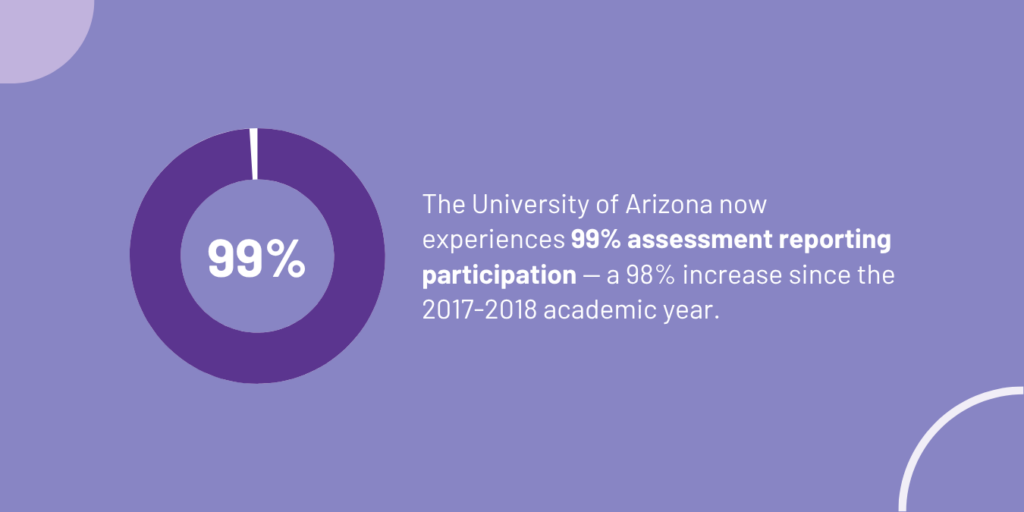
After implementing Watermark Planning & Self-Study, the university introduced a more structured, centralized approach to reporting. Over time, participation increased from 50% to 99% across 446 programs, strengthening institutional visibility and supporting accreditation efforts.
Institution Snapshot: University of Arizona
Institution Type: Public, 4-year research university
Hispanic-Serving Institution (HSI), supporting a broad student population
Land-Grant institution with a statewide community mission
Key outcomes
99% assessment reporting participation (2024-25) – up from 50% in 2017-18
Program growth from 300 to 446 programs
Centralized annual assessment cycles through structured plans
Improved readiness to demonstrate assessment activity for accreditation
The challenge
Participation in assessment reporting fluctuated year to year, ranging from 50% to 73%. At the same time, the number of academic programs continued to grow, increasing the complexity of coordinating reporting across the institution.
Without consistent participation, it was difficult to maintain a complete view of student learning outcomes or demonstrate assessment activity for accreditation.
As Elaine V. Marchello, Ph.D., Director of Assessment, explained: “We really focused on getting programs to submit…the majority of our time was spent working with programs to get them into P&SS and finishing so they can submit.”
Beyond operational strain, the stakes were significant: “…If we do not do assessment properly and report on it, we could lose our accreditation, which would be catastrophic. We also try to emphasize the importance of using evidence of student learning to improve programs and student learning.”
For a university of this scale, manual follow-up and decentralized processes were not sustainable.
The turning point
The University of Arizona implemented Watermark Planning & Self-Study to centralize and standardize assessment reporting.
As Marchello explained: “In 2021, we migrated to Planning & Self-Study…helping us renew that assessment connection through our workshops and helping us get people excited again about doing outcomes assessment.”
The platform enabled the university to:
- Establish consistent annual reporting cycles
- Centralize assessment and accreditation documentation
- Guide programs in documenting findings and improvement actions
- Support stronger use of evidence in program evaluation
To drive participation at scale, the university also introduced accountability measures tied to academic workflows: “So any program that is not assessment compliant within a department means that that department cannot propose any new courses or programs for any of their majors.”
This combination of system support and institutional accountability helped shift responsibility from the assessment office to academic leadership.
The results
With a centralized system and clear expectations in place, reporting participation increased significantly: from 50% to 99% across 446 programs.
“Our time paid off”, stated Elaine.
This improvement reduced the need for manual follow-up and allowed the assessment team to shift their focus from chasing submissions to supporting program quality and improvement.
Additional outcomes included:
- +46 percentage point increase in reporting participation
- Reduced time spent tracking submissions
- More consistent documentation for accreditation
- Greater institutional visibility into assessment activity
Reaching near-universal participation also strengthened the university’s ability to demonstrate assessment practices during accreditation review.
Elaine explained “It’s the only way we have been able to satisfy accreditation requirements… and help programs use evidence.”
If your institution is managing assessment across dozens, or hundreds, of programs, consistent reporting can be difficult to sustain without the right structure.
See how Watermark Planning & Self-Study can help your institution increase reporting participation, streamline assessment processes, and gain clearer visibility into student learning outcomes.