




Trusted AI-powered solutions designed to power human expertise and accelerate institutional success.

Watermark is advancing AI in higher education, guided by impact to create meaningful change. Our goal is to deliver practical, ethical AI that saves time, deepens insight, and supports student, faculty, and institutional success.

Read on to learn how we design and apply AI responsibly, the product features it powers, and resources that can help you make the most of it.

Request a demoExplore our AI principles

Our responsible approach: AI guided by impact

AI is reshaping higher education but at Watermark, we’re not chasing hype. We’re focused on solving real challenges for faculty and administrators. Our approach is simple: use AI responsibly to save time, remove friction, and help institutions make smarter decisions.

Our six responsible AI pillars define how to regulate AI in higher education through transparency, fairness, and oversight. This framework ensures AI enablement in higher education happens ethically and effectively. Because AI should strengthen your mission, not distract from it.

Our AI-powered solutions

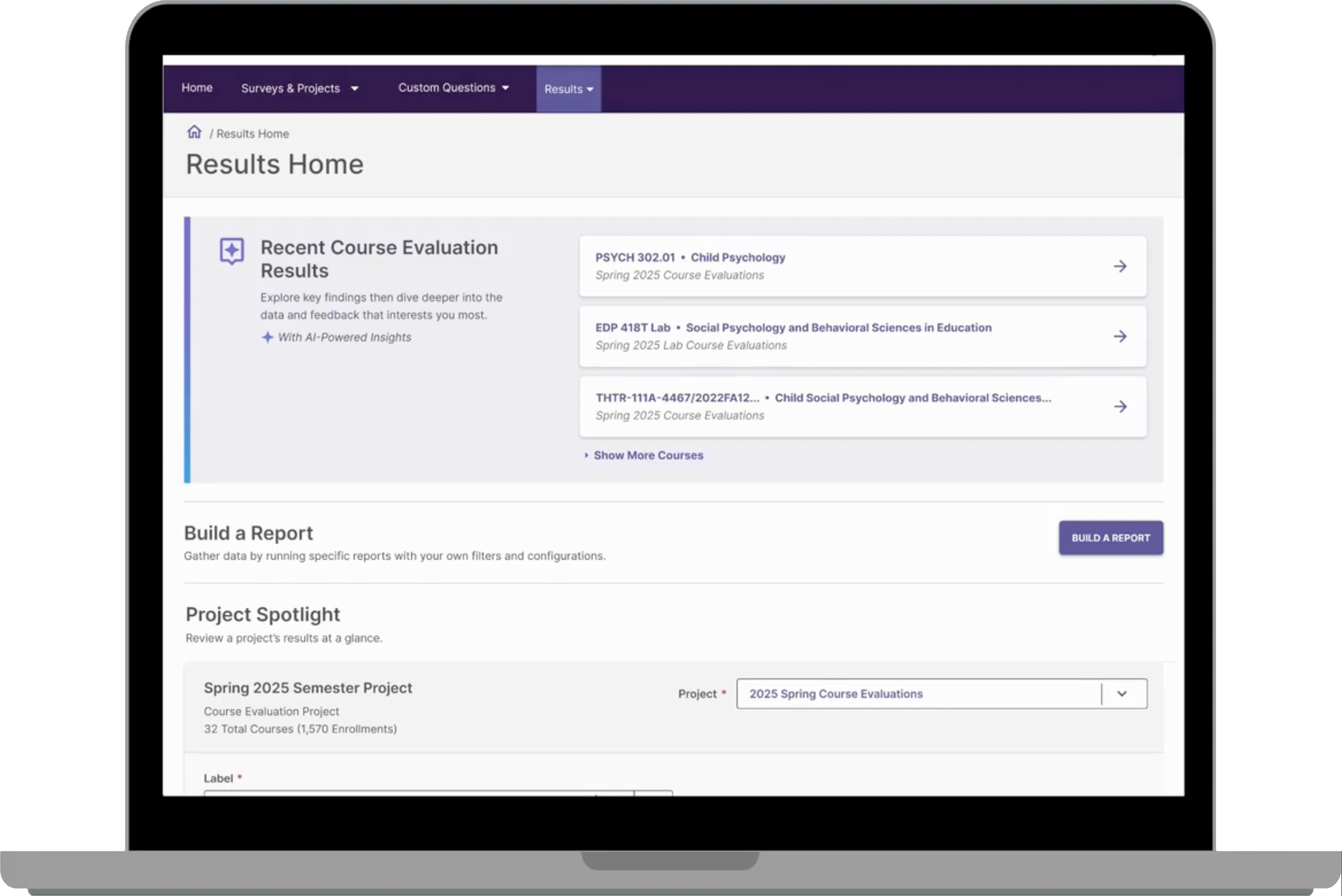
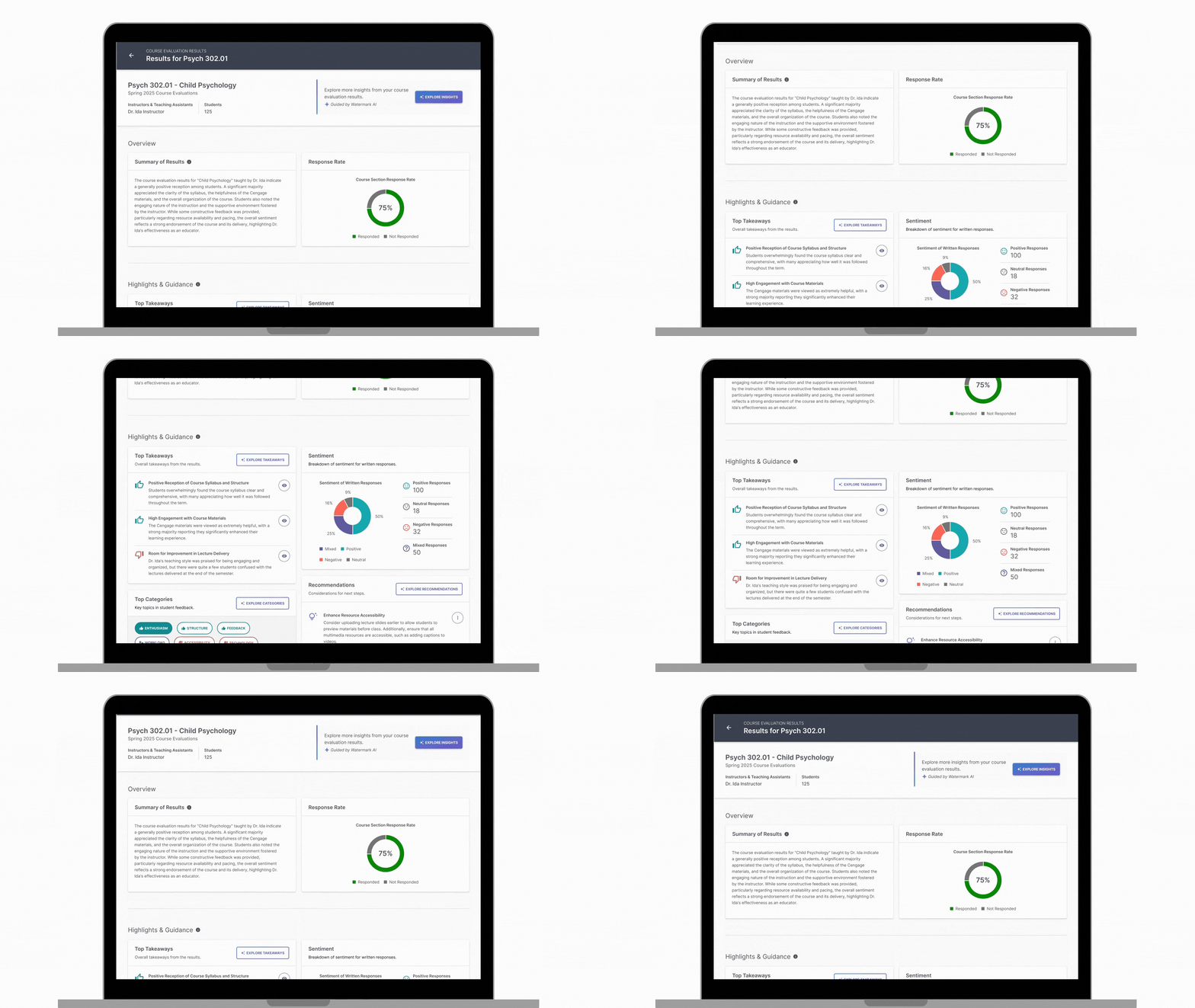
Watermark’s first generative AI feature, Instructor Insights for Course Evaluations & Surveys, is available now. This AI-powered tool helps faculty turn student feedback into impact by providing clear, natural language summaries and actionable steps. It eliminates the manual analysis step so faculty can instead focus on reflection and action.
ai in higher education


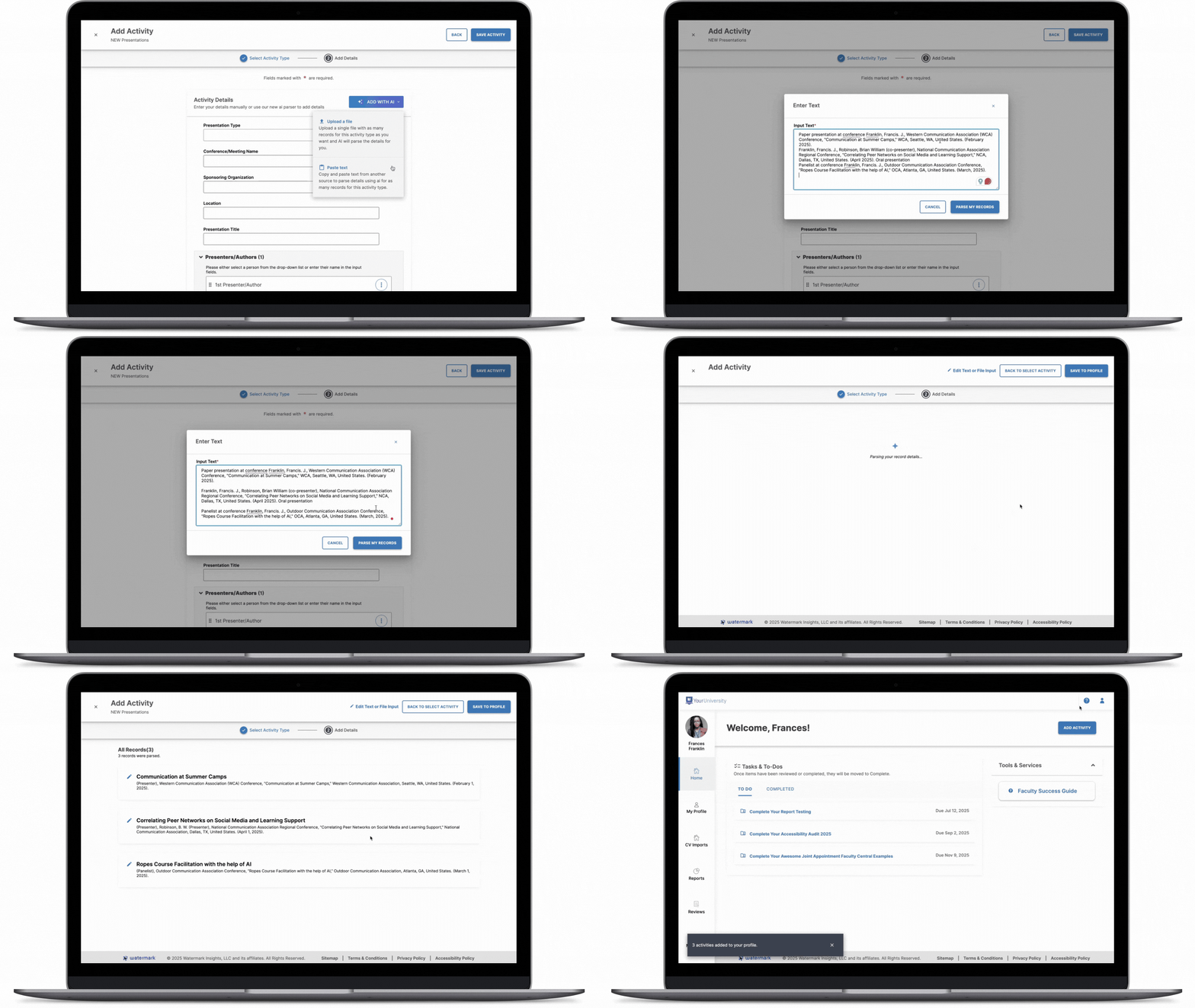
Coming Spring 2026! Automate data input in Faculty Success.

Never enter faculty activity data manually again. Watermark Faculty Success with AI-powered features handles the tedious input work so faculty can reclaim valuable time, quickly review and approve their profile updates, and focus on using their data to showcase their impact and advance their careers.

ai in higher education


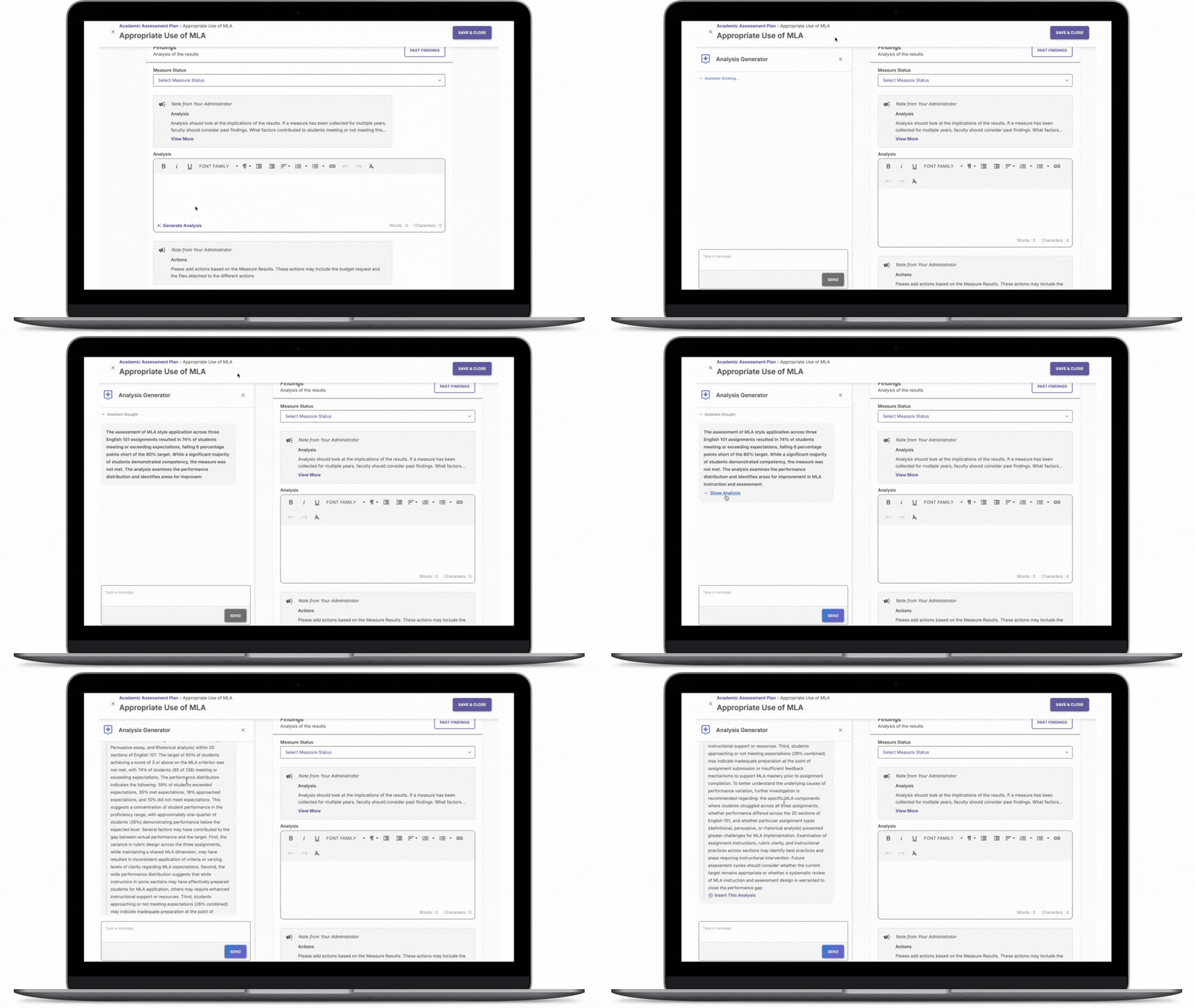
Streamline assessment in Planning & Self-Study.

The Assessment Catalyst Toolpack (ACT) is designed to drive stronger participation in the assessment process and enable faster, frictionless, context-rich data analysis. This toolpack will help faculty and assessment leads quickly identify actionable improvements to support continuous improvement.

ai in higher education

FAQ: AI in Higher Education


How is AI changing higher education institutions today?

AI is transforming higher education across nearly every department, from recruitment and admissions to student performance monitoring and accreditation preparation. Institutions are using AI to streamline application reviews, predict enrollment trends, identify at-risk students, improve retention strategies, and automate administrative tasks. These tools help colleges and universities operate more efficiently while making data-driven decisions that enhance student outcomes and institutional effectiveness.


What is responsible AI adoption in higher education?

Responsible AI adoption in higher education means implementing artificial intelligence tools in a strategic, ethical, and transparent way that supports student learning while minimizing risks. This includes creating clear guidelines for AI use, maintaining academic integrity, protecting student data, mitigating bias, and ensuring equitable access to AI tools. Institutions must promote AI as a supplement to learning, not a replacement for critical thinking, original work, or instructor oversight.


How can AI help reduce faculty workload?

AI can reduce faculty workload by automating repetitive and time-consuming tasks. This includes grading assignments, checking plagiarism, drafting emails, generating lesson materials, creating rubrics, summarizing research, analyzing student data, and identifying at-risk students. By handling routine tasks, AI frees faculty to focus on teaching, mentorship, and meaningful student engagement.

To learn more about our higher education solutions, request a demo today.

“As someone who’s trying to promote student evaluations, I’m on all these committees, and I’ve worked really hard to get our student evaluation statements, measurable and not about [faculty] personality. The Recommendations feature suggests ways we can use these tools to actually improve student learning. It’s not only ‘why this matters’, but how can I do this better?”

Dr. Taylor J. Mitchell
Embry-Riddle Aeronautical University

Ready to see AI guided by impact?