Faculty evaluations are one of the most valuable tools for improving teaching quality and institutional growth. But for many colleges and universities, turning feedback into lasting change isn’t always easy. With modern faculty evaluation software, institutions can simplify the faculty evaluation process, bring their data together, and turn insights into meaningful progress that supports educators and students alike.
Understanding faculty evaluation data
A thoughtful evaluation of faculty starts with understanding the types of data institutions collect, and what those insights reveal.
Types of data collected:
Most higher education institutions gather a mix of quantitative and qualitative data through faculty evaluations, including:
- Student feedback and faculty evaluation by students
- Peer reviews and self-assessments
- Classroom observations
- Research, publications, and service contributions
These inputs form a comprehensive view of teaching effectiveness and faculty impact.
Quantitative vs. qualitative data:
Quantitative data, such as scores or ratings, help reveal clear trends, while qualitative comments from students or peers add context behind the numbers. Together, they create a well-rounded assessment and evaluation of faculty performance that encourages professional growth.
Common challenges
Without a consistent faculty evaluation process, valuable insights can become fragmented and difficult to act on. Inconsistent metrics, potential bias in student feedback, and limited tracking over time can make it hard for leaders to feel confident in the story their data is telling. This is where modern faculty evaluation software can help overcome these barriers, bringing everything together so institutions can focus on progress, not process.
Establishing a data-informed framework
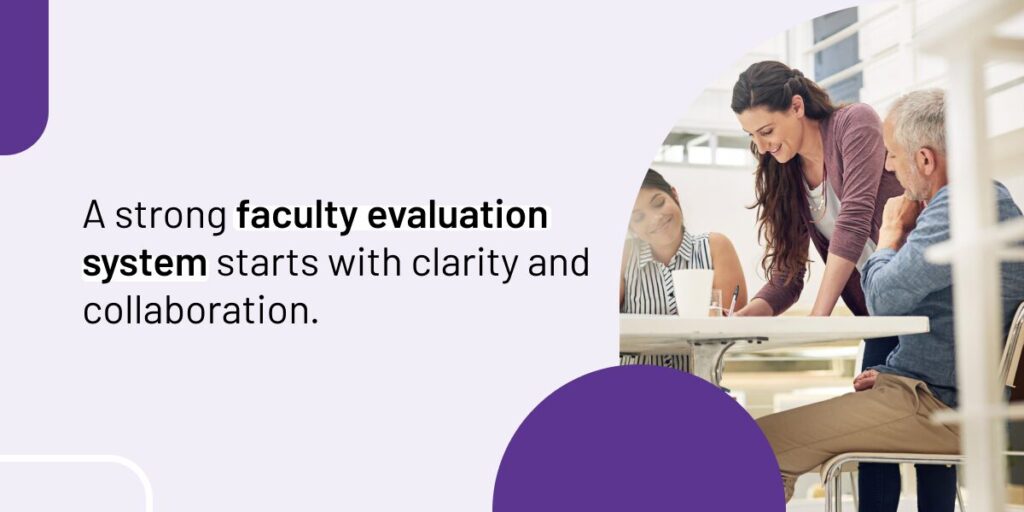
A strong faculty evaluation system starts with clarity and collaboration. When faculty and administrators come together around shared goals, consistent rubrics, and transparent expectations, the process feels supportive and fair. A thoughtful faculty annual evaluation rubric might include teaching effectiveness, scholarly achievements, and meaningful service, showcasing the full impact faculty have on your community.
Pair that framework with a centralized digital solution like Watermark’s Educational Impact Suite, and the faculty evaluation process becomes smoother, more reliable, and far more insightful. Information from your LMS, SIS, and internal surveys flows seamlessly into one connected place, empowering data-informed decisions and continuous improvement that benefits everyone.
Analyzing and interpreting the data
Once your evaluation framework is established, the next step is to turn data into insight.
Identify trends:
Use longitudinal data to spot patterns across departments or academic years. Are certain teaching methods consistently linked to higher student engagement? Has student satisfaction improved in specific programs?
Contextualize findings:
Combine faculty evaluation results with other institutional metrics such as retention rates, course load, or student learning outcomes. This broader view helps administrators understand how faculty performance connects to institutional goals.
Avoid common pitfalls:
It’s important to remember that student satisfaction scores are only one piece of the story. Factors like course difficulty, class size, or even unique teaching approaches can influence results. Outliers should be reviewed with care. Not dismissed, but understood in the right context. Data becomes most valuable when it’s presented clearly and thoughtfully, which is why the best faculty evaluation systems offer intuitive visualizations and filtering tools to help uncover meaningful insights.
Turning data into action
Collecting data is only the beginning. Real impact happens when insights are put into action. With the right faculty evaluation software, institutions can build a continuous feedback loop. One that measures performance and drives meaningful improvement across campus.
1. Inform faculty promotions and reviews
Collecting data is only the beginning. Real impact happens when insights are put into action. With the right faculty evaluation software, institutions can build a continuous feedback loop. One that measures performance and drives meaningful improvement across campus.
2. Improve courses and programs
When faculty evaluation data is shared with instructors, it helps them refine curricula and enhance student learning experiences. Automated reporting tools deliver feedback quickly so faculty can take action while it matters most, helping improvement feel timely and achievable.
3. Reevaluate teaching methods
Faculty and administrators can use evaluation results to explore what’s working well and where a shift might make a difference. Access to real-time data empowers educators to adjust teaching methods mid-semester, apply student suggestions, and track the impact of those changes over time.
4. Test new teaching ideas
Frequent faculty evaluation by students, including midterm or micro-surveys, gives educators the confidence to experiment with new approaches and make evidence-based adjustments. This ongoing cycle of feedback and adjustment supports innovation, boosts engagement, and leads to stronger learning outcomes.
5. Support accreditation efforts
Accreditation reporting is a major undertaking, and a strong faculty evaluation system can make it far more manageable. Centralized reporting tools make it easy to demonstrate progress on learning outcomes and faculty development.
6. Track student engagement
Faculty evaluations offer a direct window into how students are experiencing their courses and campus environment. Feedback can reveal strengths to build on, obstacles to remove, and support students may need to thrive. When paired with retention and success data, these insights help institutions foster deeper connection and promote long-term student achievement.

Communicating findings effectively
Transparency builds trust. When done right, it strengthens a culture of continuous improvement. Faculty should receive clear, digestible summaries of their evaluation results, along with actionable guidance and access to support resources for professional growth. Visual dashboards can help department chairs and academic leaders identify trends, recognize progress, and promote successful teaching strategies across the institution.
For adjunct and part-time instructors, structured adjunct faculty evaluation processes ensure they receive the same quality feedback and recognition as full-time faculty. By using consistent templates like a faculty candidate evaluation form, institutions maintain fairness and alignment across all teaching roles.
FAQs
What are the key elements of an effective faculty evaluation process?
- A strong evaluation process is built on clear expectations, consistent rubrics, multiple data sources, and transparent communication. It should provide timely, actionable feedback that supports both accountability and professional growth.
How can we ensure fairness in adjunct faculty evaluation?
- Fairness comes from using the same well-defined criteria, structured templates, and consistent processes for all instructors. Providing adjunct faculty with clear expectations, timely feedback, and access to professional development ensures equity and support.
What is the best way to utilize faculty evaluation by students?
- Student evaluations are most powerful when paired with other measures and reviewed in context. Look for patterns over time, consider factors like course difficulty or class size, and use the feedback to guide meaningful dialogue and targeted improvements.
How does faculty evaluation software support accreditation efforts?
- Evaluation software centralizes evidence of teaching effectiveness, learning outcomes, and faculty development. With organized data and ready-made reports, institutions can streamline documentation and demonstrate continuous improvement.
Measuring impact
The ultimate goal of any faculty evaluation process is continuous improvement. Institutions should routinely examine whether evaluation-driven initiatives are leading to measurable gains in teaching quality, student engagement, and overall institutional success. The assessment and evaluation of faculty performance should empower educators, not overwhelm them. With Watermark, institutions gain a trusted partner in building a smarter, simpler, and more unified approach to improvement. To see what’s possible next, explore how our new AI capabilities within CES are making faculty evaluations even smoother.