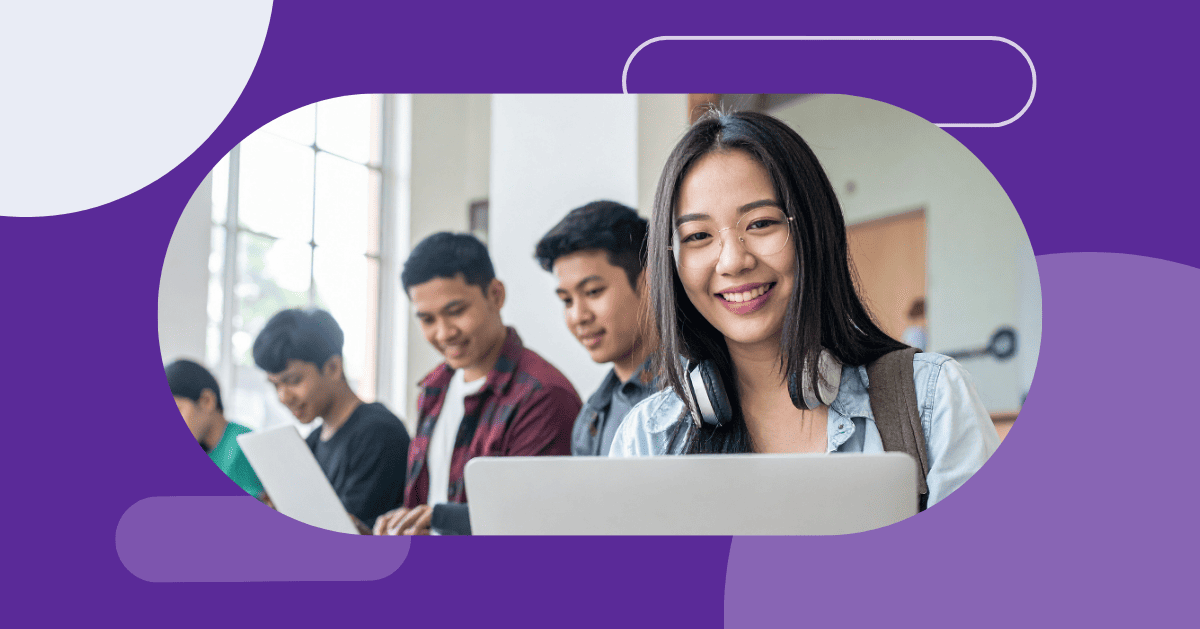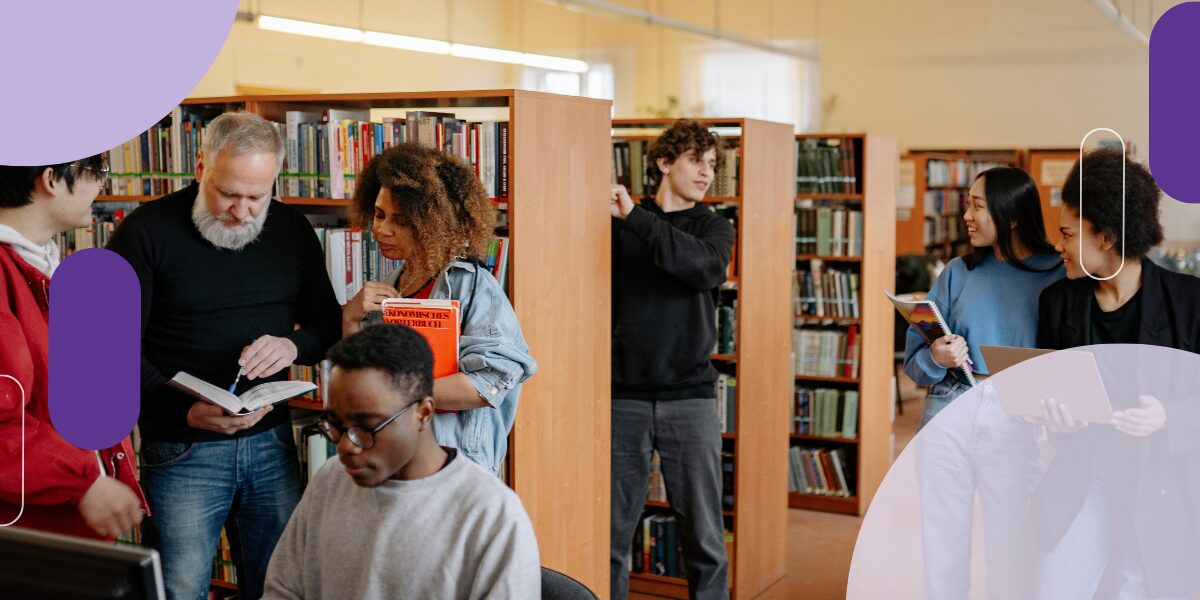
Community colleges serve students with a wide range of goals, responsibilities, and life experiences. Many balance coursework with full-time jobs, family obligations, military service, or other commitments, making it harder to participate in campus life through traditional activities.
That’s why co-curricular experiences are an important part of student success. When designed for community college students, these experiences help students build connections, develop career-ready skills, strengthen their sense of belonging, and stay engaged throughout their education.
By designing, measuring, and improving co-curricular opportunities, community colleges can create more meaningful student experiences that support retention, persistence, and completion. By using Student Success & Engagement, institutions can even better understand student needs, measure engagement, and improve co-curricular experiences over time.
What are co-curricular experiences?
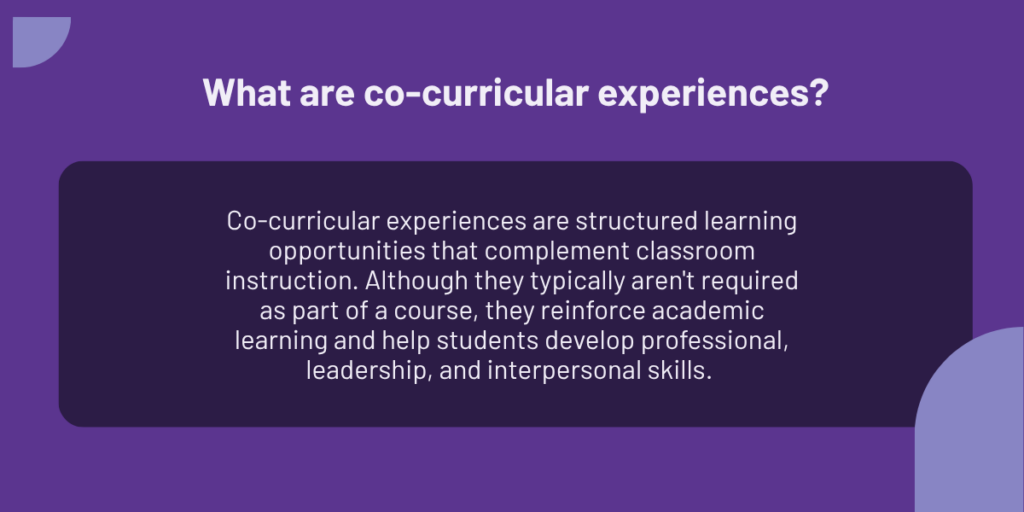
Co-curricular experiences are structured learning opportunities that complement classroom instruction. Although they typically aren’t required as part of a course, they reinforce academic learning and help students develop professional, leadership, and interpersonal skills.
Examples of co-curricular experiences include:
- Peer mentoring programs
- Encouraging cocurricular engagement in a community college setting has challenges, the most common of which include:
- Student clubs and organizations
- Community service and volunteer projects
- Student leadership opportunities
- Career development workshops
- Service-learning initiatives
- Cultural and campus events
- Student government
- Internship preparation activities
- Wellness and financial literacy programs
Unlike many four-year institutions, community colleges often serve commuter, adult, first-generation, and part-time students. As a result, successful co-curricular programming must be flexible, accessible, and aligned with students’ academic and career goals.
Why co-curricular experiences matter for student success
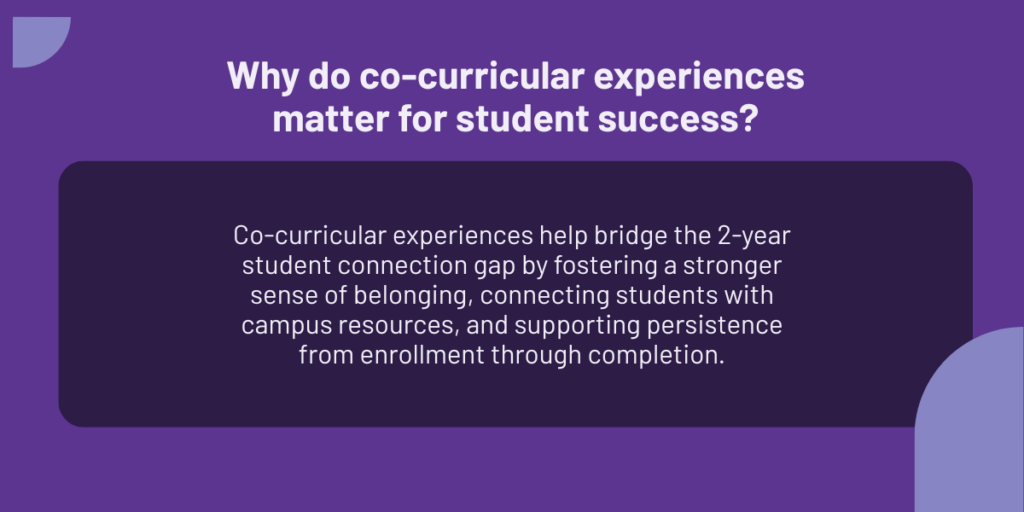
For community colleges, co-curricular engagement isn’t simply about increasing campus activity. Many students commute, work while attending school, care for family members, or enroll part time, leaving fewer opportunities to build connections outside the classroom. Co-curricular experiences help bridge that gap by fostering a stronger sense of belonging, connecting students with campus resources, and supporting persistence from enrollment through completion.
Thoughtfully designed co-curricular experiences also help students connect their education to their personal and professional goals. Whether through leadership opportunities, career workshops, mentoring, or community service, these experiences reinforce classroom learning while preparing students for transfer or the workforce.
Students who participate in meaningful co-curricular activities often develop:
- Stronger communication and collaboration skills
- Leadership and problem-solving abilities
- Greater confidence and self-efficacy
- Time management and organizational skills
- Professional behaviors valued by employers
- Stronger connections to their institution
These experiences help students apply classroom learning in real-world settings while supporting career exploration and community engagement. Learn more about the importance of co-curricular programs for student success.
Community college-specific benefits
Unlike many four-year institutions, community colleges benefit most from co-curricular programs that reduce barriers to participation and meet students where they are. Successful community college programs often:
- Offer flexible scheduling, including evening and virtual options
- Connect activities to workforce preparation and career pathways
- Support working students, caregivers, and adult learners
- Build relationships that encourage persistence
- Provide opportunities for students who may not otherwise participate in campus life
When students feel connected to their institution, they’re more likely to persist toward their educational goals.
Common challenges to co-curricular engagement
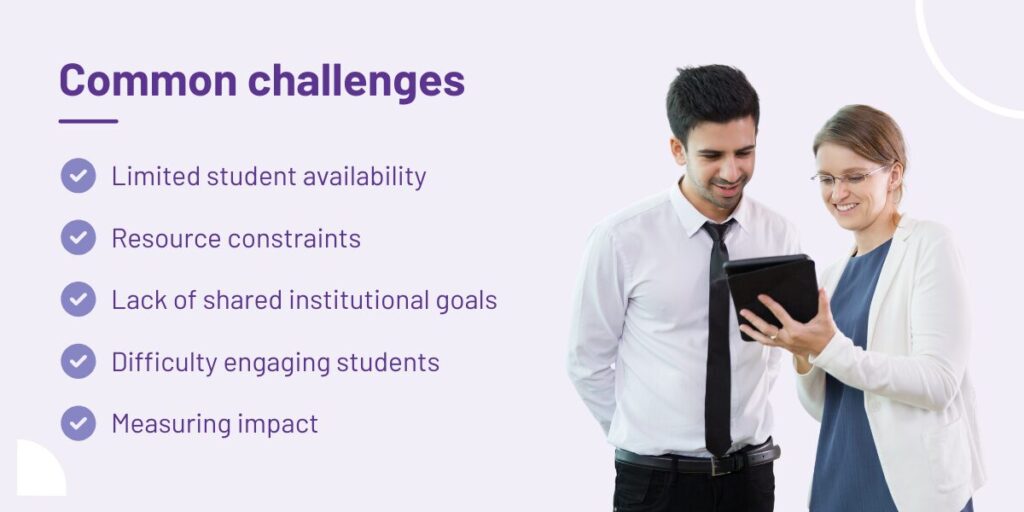
Despite their value, community colleges often face obstacles when building successful co-curricular programs.
Limited student availability
Many students juggle employment, family responsibilities, transportation challenges, and coursework, making traditional programming difficult to attend.
Resource constraints
Limited staffing and budgets can make it difficult to develop, coordinate, and sustain co-curricular programs.
Lack of shared institutional goals
Without clear objectives, departments may create disconnected activities that don’t align with broader student success initiatives.
Difficulty engaging students
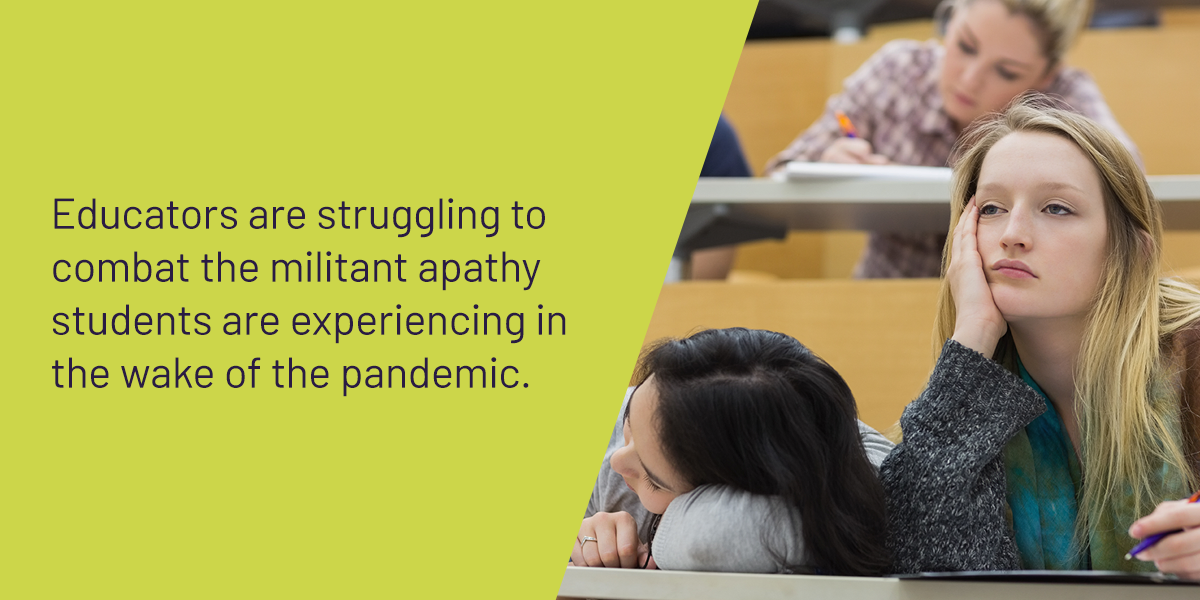
Students may not understand the value of participating or may struggle to find opportunities that reflect their interests, schedules, or career aspirations.
Measuring impact
Many institutions collect participation data but lack a consistent way to connect engagement with student outcomes such as persistence, retention, or completion.
How to measure and improve engagement
Building stronger co-curricular programs starts with understanding student needs and using data to improve experiences.
Gather student feedback
Use surveys, focus groups, and other feedback tools to understand who is participating, what barriers exist, and which experiences students value most. Review participation data to identify trends, such as low attendance due to work schedules or transportation challenges, and use those insights to shape future programming.
Connect co-curricular learning to academics
Partner with academic departments to create experiences that reinforce classroom learning while helping students explore careers, practice leadership, or build professional skills. Connecting activities to academic programs and workforce pathways can make participation more relevant for community college students.
Create campus-wide collaboration
Student affairs, academic affairs, advising, faculty, and institutional research teams should work together to establish shared goals and evaluate co-curricular initiatives. Encourage academic departments, student support offices, and community partners to collaborate on programs that align with students’ academic and career interests.
Remove barriers to participation
Offer flexible scheduling, hybrid or virtual programming, child care resources when available, and events that reflect the needs of commuter and working students. Career-focused workshops, financial wellness programming, and other practical opportunities can also make co-curricular participation more accessible and valuable.
Measure outcomes over time
Track participation alongside student success metrics such as retention, persistence, satisfaction, and completion. Reviewing these outcomes over time helps institutions refine programming, allocate resources effectively, and demonstrate impact.
Enhance co-curricular engagement with Watermark
With a data-driven approach, you can tailor your co-curricular programs to engage faculty and students at your community college. For institution-wide insights you can trust to enhance engagement, check out Watermark’s Educational Impact Suite (EIS).
This easy-to-implement higher education software suite includes integrated solutions to help you:
- Gather and analyze student survey data to better understand co-curricular experiences and identify opportunities for improvement.
- Provide mobile-friendly tools that help students stay connected to campus resources and co-curricular opportunities.
- Build customized learning pathways that support students with different schedules, goals, and commitments.
Frequently asked questions
What are co-curricular experiences?
Co-curricular experiences are organized learning activities outside the classroom that complement academic coursework. Examples include student organizations, leadership programs, volunteer opportunities, career workshops, mentoring, and campus events.
Why are co-curricular experiences important at community colleges?
Community colleges serve many commuter, part-time, working, and adult students who may have fewer opportunities to connect with campus. Co-curricular experiences help students build relationships, develop career-ready skills, strengthen their sense of belonging, and remain engaged throughout their educational journey.
How can community colleges increase student participation?
Institutions can improve participation by offering flexible scheduling, using student feedback to shape programming, connecting activities to career development, reducing barriers to participation, and communicating the value of engagement throughout the student experience.
How do colleges measure the success of co-curricular programs?
Successful institutions combine participation data with student surveys and outcomes such as retention, persistence, student satisfaction, and completion. Measuring these metrics helps colleges understand which programs have the greatest impact and where improvements are needed.