As accreditation continues to evolve under shifting federal priorities and increased public scrutiny, institutions are challenged to adapt without losing sight of their core mission.
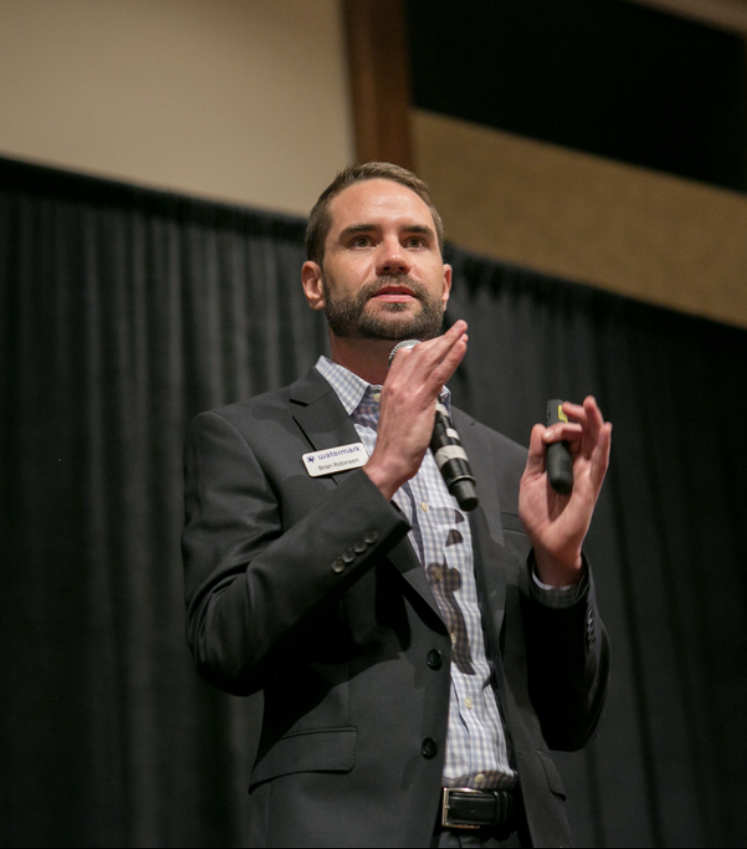
In this blog, Dr. Glenn Phillips, Senior Insights Consultant at Watermark, expands on insights shared during The Chronicle of Higher Education’s virtual forum, “The Future of Accreditation.” He explores the changing dynamics of the accreditation process and offers practical guidance for institutional researchers, senior administrators, and faculty leaders to best position their campuses for success. Glenn works directly with client colleagues to discuss good practices in assessment and accreditation, and suggest the use of integrated technology as appropriate. Prior to Watermark, Phillips served as the Director of Assessment at Howard University and the Acting Director of Assessment at The University of Texas at Arlington.
From new expectations around outcomes and accountability to the enduring importance of institutional effectiveness, this blog focuses on how to navigate policy shifts while staying grounded in student-centered practice.
What it really means to be “in the trenches”
Working in higher education in 2026 is not for the faint of heart. This is especially true for faculty and staff responsible for supporting institutional and discipline-specific accreditation. National and state-level policy discussions have brought increased attention to a process that was once relatively behind the scenes at most colleges and universities. As regulations evolve and new perspectives emerge, the U.S. appears poised to continue building on its existing accreditation framework while introducing greater flexibility and new approaches. Long-standing regional boundaries are loosening, opening the door for new accreditors and models that place increased emphasis on return on investment, student outcomes, and intellectual pluralism.
While the winds are swirling outside, those inside who must still assess the right things, prepare data that contribute to accreditation self-studies, and carry on the institutional effectiveness processes that are a hallmark of most accreditation standards are left wondering when the next shoe will drop. It is a precarious place to be, and many are wondering what they should be doing while they wait.
Staying the course: why accreditation best practices still matter
The good news for those in the accreditation business is that accreditation is both advertised and built as a collection of good practices. People in these roles are already doing work in line with good practice. Assessment and accreditation professionals are known for their disciplined approach to standards, policies, and compliance. Regardless of how standards change or which accreditation commission institutions settle on, the good practice of responsible and meaningful storytelling should still be the coin of the realm.
This should be an encouragement to those who have spent years building reliable processes that consistently demonstrate the impact of thoughtful reflection on administrative and student learning outcomes. Also, there is hope that some commissions’ promises to streamline processes may create more flexibility in defining what constitutes good evidence of assessment.
Be vigilant and stay involved in the changing accreditation landscape
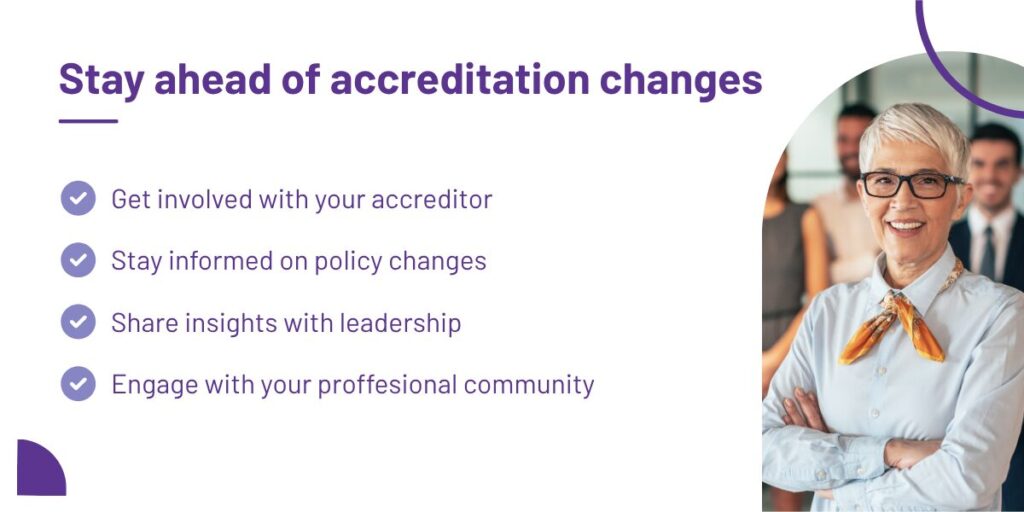
Many accreditors are using this shift as an opportunity to introduce new educational content or to double down on the professional development work they have been doing for years. Now is a great time to be the most knowledgeable person on your campus about what’s happening. Not only will a better understanding of changes in standards or changes in the application of standards help you to direct the work of your office, but you can also become a point of reference for leadership who are trying to navigate changes alongside you.
Get involved with your accreditor
Serving as a reviewer or volunteer for your institutional or discipline-specific accreditor can put you on the front lines. Not only will you hear what’s happening, but you will learn how accreditation groups are responding to federal and state shifts that could impact higher education. Involvement can also be as simple as making sure you follow your accreditors on social media or listservs.
Stay informed on federal and state higher education policy
Understanding federal- and state-level actions is necessary to anticipate upcoming changes. While national publications are good for introducing executive orders and legislation that impact higher education, it is also important that you understand how these actions may directly impact your unique institution or system.
Now is the time for community
The changing landscape of accreditation, and by proxy institutional effectiveness, creates an opportunity for those who have been in the field for a while and those new to the work to come together. As institutions navigate new ways to gather data and respond to new standards, we have the opportunity (and privilege) of sharing this with a host of other professionals looking to do great things with the same limited resources and uncertain direction.
Coming together at conferences, working groups, and even over coffee can dramatically decrease the number of wheels we must invent independently before we can all start rolling in the same direction.
As a final thought, I would encourage everyone impacted by the current shift in accreditation to remain curious, cautiously optimistic, and hopeful. As long as we stay mission-focused, remind ourselves and each other that our ultimate goal is not about paperwork. Our ultimate goal is about students–understanding who they are as they enter our institutions, tracking their journey as they grow, and celebrating their successes as they graduate and shape tomorrow.
Conclusion – Staying mission-focused in the future of accreditation
Accreditation may be shifting, but the core work hasn’t changed. Institutions still need to understand what’s working, tell that story clearly, and keep students at the center of it all. Those fundamentals will continue to matter, regardless of how policies evolve.
Dr. Glenn Phillips’ perspective brings that into focus. Accreditation isn’t just a compliance exercise, it’s an opportunity to reflect, improve, and demonstrate real impact.
Want more context and practical resources as this work continues to evolve? Learn more about how we support accreditation efforts.