Assessment fatigue is real. For many institutions, accreditation and assessment in higher education feels cyclical, high-pressure, and disconnected from daily academic work. Faculty see extra reporting. Staff manage deadlines. Leaders worry about risk. When systems are fragmented or manual, even meaningful improvement efforts can start to feel like compliance exercises.
The Planning & Self-Study in Action series explores how institutions move beyond that pattern. Across six installments, we examine the measurable return institutions gain by replacing disconnected processes with structured, collaborative systems that support continuous improvement, not just documentation.
Watermark Planning & Self-Study (PSS) helps institutions build high-quality improvement strategies for education with shared visibility, clearer accountability, and streamlined workflows that make improvement work manageable. When reporting is organized and transparent, engagement increases because people can see how their work connects to institutional goals.
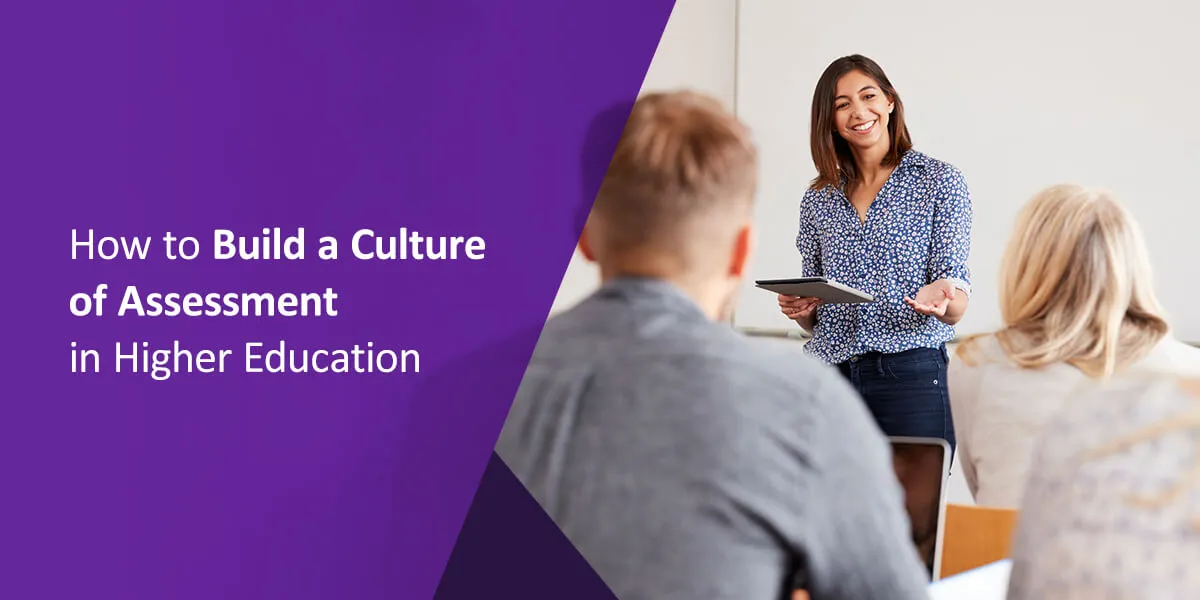
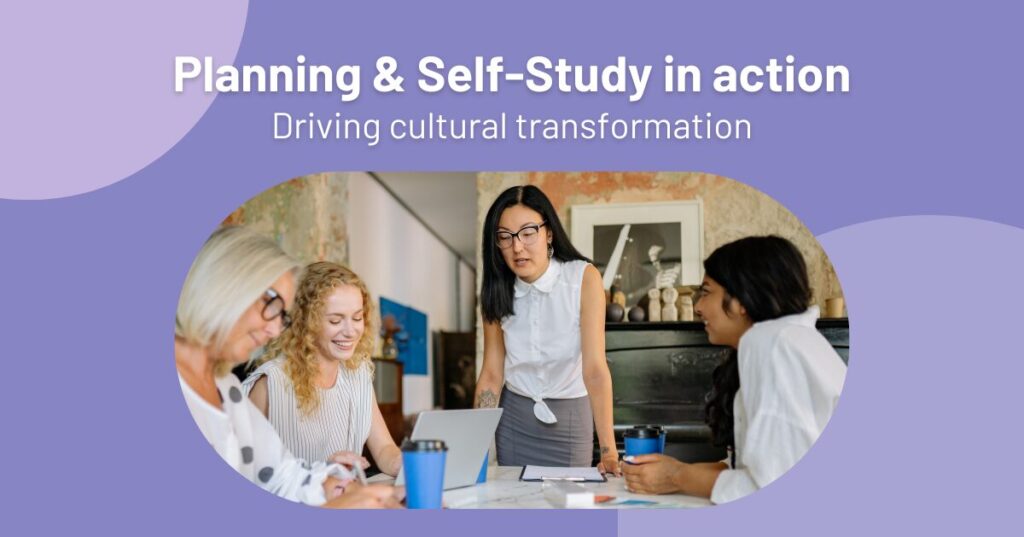
Part 1 focused on the time saved. This installment focuses on how better systems reshape ownership, collaboration, and institutional improvement. Culture shifts when assessment stops feeling like an audit and starts functioning like a tool.
Increasing faculty engagement in assessment
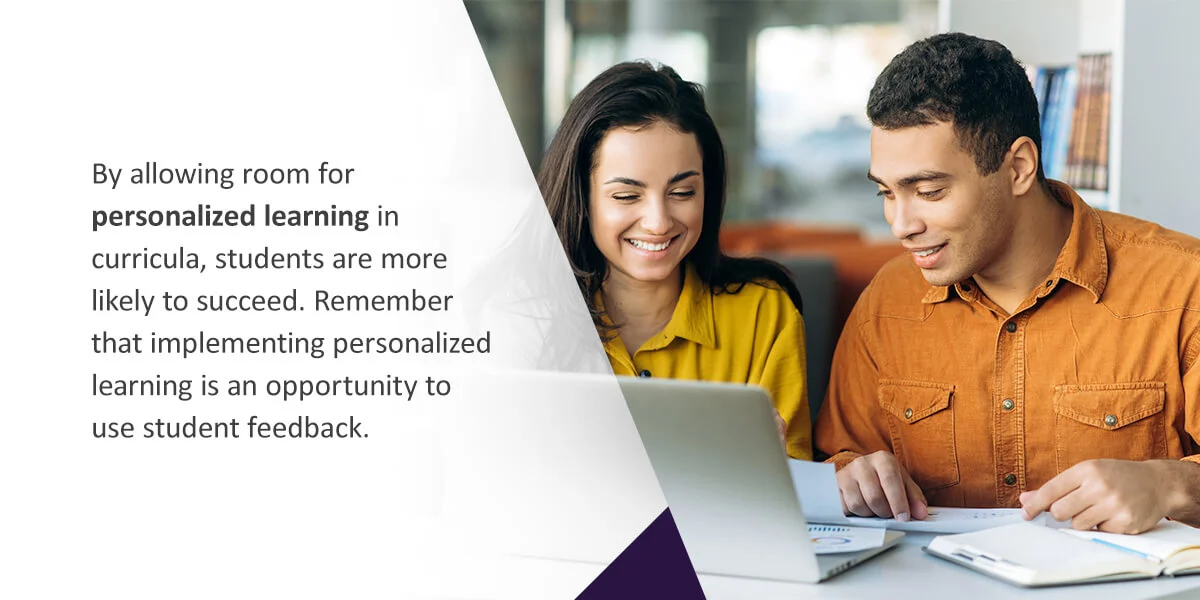
A healthy assessment culture depends on faculty participation. Planning & Self-Study facilitates deeper engagement in the assessment process and is crucial for maintaining momentum.
It removes the frustrating technical hurdles with:
- Easier interaction with assessment data
- Built-in reminders and dashboards that keep work visible
- A significantly reduced burden compared to manual or disconnected systems
When assessment management software works with faculty instead of against them, it’s much easier to keep the momentum going.
“I would have a very difficult time in maintaining that momentum from a faculty perspective with any other tool. This is the first time I’ve seen them really engage in this way.”
— Leeann Cline-Burris,
Senior Director of Strategy and Analytics, Isothermal Community College
Faculty aren’t just checking boxes; they’re working with evidence in real time and seeing how their efforts connect to broader institutional goals.
“Watermark allows our faculty to be able to engage with assessment at a higher level than what they were with our manual system. [There are] reminders on their dashboards, ways that they’re interfacing with the data in real time. That makes it more realistic for them…We want a culture of assessment in our institution and you need a system that will help facilitate that without being burdensome to faculty, and Watermark did that.”
— Dr. Krista Hoekstra,
Dean of Health and Science, Crown College
This is what engaging faculty in assessment looks like in practice, and it’s the engine of cultural change.
Shifting from reactive compliance to proactive ownership
As engagement grows, behavior begins to change. Institutions using Planning & Self-Study regularly describe a shift away from top-down toward shared ownership of assessment.
This shows up in concrete ways like faculty completing more assessment reports on time, and the time to completion going down.
“Faculty and staff are reaching out early to schedule assessment meetings rather than members of the Institutional Effectiveness team having to manage this communication. Additionally, some faculty and staff are completing their assessment reports independently ahead of these meetings rather than putting off the report entry.”
— Leeann Cline-Burris,
Senior Director of Strategy and Analytics, Isothermal Community College
Faculty and staff are taking greater ownership and initiative over the assessment cycle, transitioning from a reactive position to proactively initiating and completing reports ahead of deadlines.
This evolution changes internal dynamics, moving assessment from a mandate to a process they own. Institutional effectiveness leaders move from chasing compliance to supporting insight and improvement. This shift in mindset enables institutions to operate faster and with greater confidence.
That’s a meaningful shift in closing the loop on assessment.
Turning assessment data into actionable insight
The goal of assessment is to actually use the data to make decisions. Planning & Self-Study provides timely access to assessment data, allowing faculty and leadership to quickly identify trends and take swift action.
This scalability is essential for institution-wide improvement.
At Louisiana State University, Planning & Self-Study unlocked insight that simply wasn’t possible before.
“[With Watermark Planning & Self-Study] we have timely access to assessment data with over 100,000 student points across all proficiencies, providing faculty and leadership with insight that was previously impossible. Watermark’s platform has enabled a level of scalability and responsiveness that has elevated our effectiveness in supporting student success.”
Tara Rose,
Associate Vice Provost, Office of Institutional Effectiveness, Lousiana State University
This is where assessment moves from reporting to strategy. Data becomes a shared asset that informs decisions, priorities, and continuous improvement.
Reducing friction to improve adoption and perception
One of the most underestimated barriers to assessment culture is the emotional weight it carries.
Planning & Self-Study directly addresses that friction by eliminating repetitive manual steps and intentionally reducing cognitive load through clear prompts, focused workflows, and side-by-side views that surface exactly what users need without constant toggling or guesswork.
Key benefits users experience include:
- Carrying forward of measures and documentation
- Simplified reporting workflows
- Fewer repetitive manual tasks
The cumulative cultural impact of Planning & Self-Study
On their own, each of these changes matters. Together, they reshape culture. Engagement leads to more ownership, which helps enable action and ultimately acceptance.
Planning & Self-Study supports this transformation by:
- Reducing process friction
- Improving access to data
- Empowering faculty and staff
- Supporting high-quality improvement strategies
Culture change doesn’t happen overnight, but with the right assessment management software, it becomes achievable and sustainable.
Enabling continuous improvement at scale
Saving time creates the breathing room needed for faculty to actually engage with their data. That engagement leads to stronger insights, empowering the school to make meaningful, evidence-based improvements without the usual stress.
See how Planning & Self-Study transforms assessment culture. Get a Planning & Self-Study Demo to see how Watermark can help your institution move from compliance-driven reporting to a genuine, campus-wide culture of continuous improvement.
Read the entirety of our six-part series here:
Part 1: Planning & Self-Study in action: Maximizing time and efficiency
Part 2: How UTRGV streamlined assessment workflows
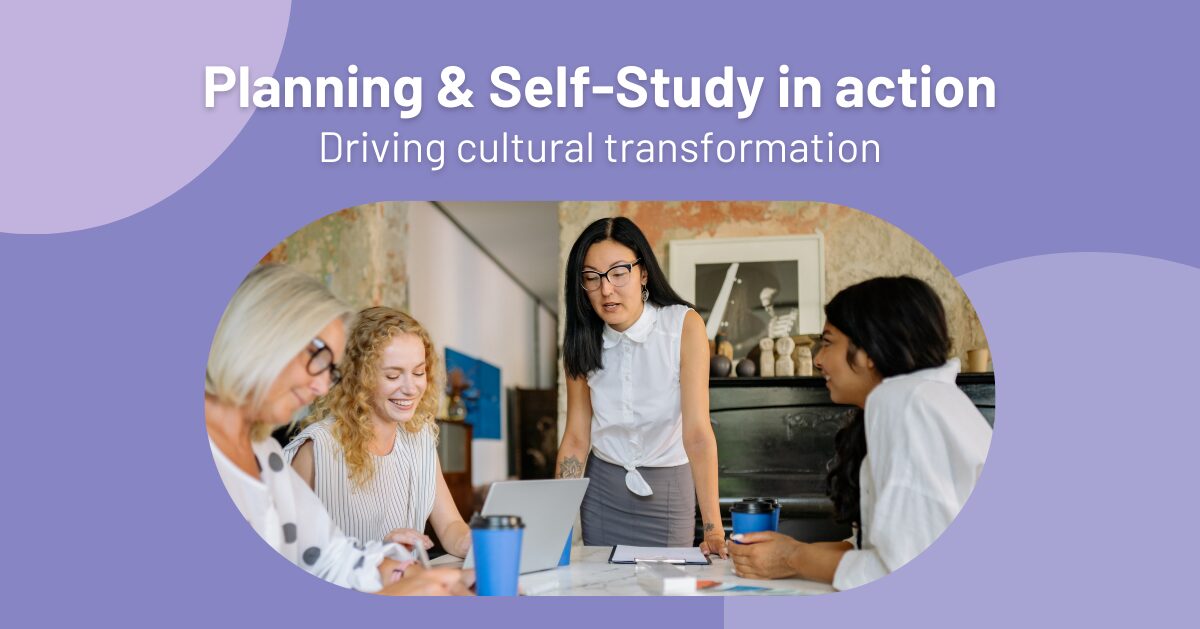
Part 3: Planning & Self-Study in action: Driving cultural transformation
Part 4: How Isothermal Community College strengthened assessment with Planning & Self-Study
Part 5: Planning & Self-Study in action: Securing reputation & compliance
Part 6: How the University of Arizona increased assessment reporting participation by 99% across 446 programs