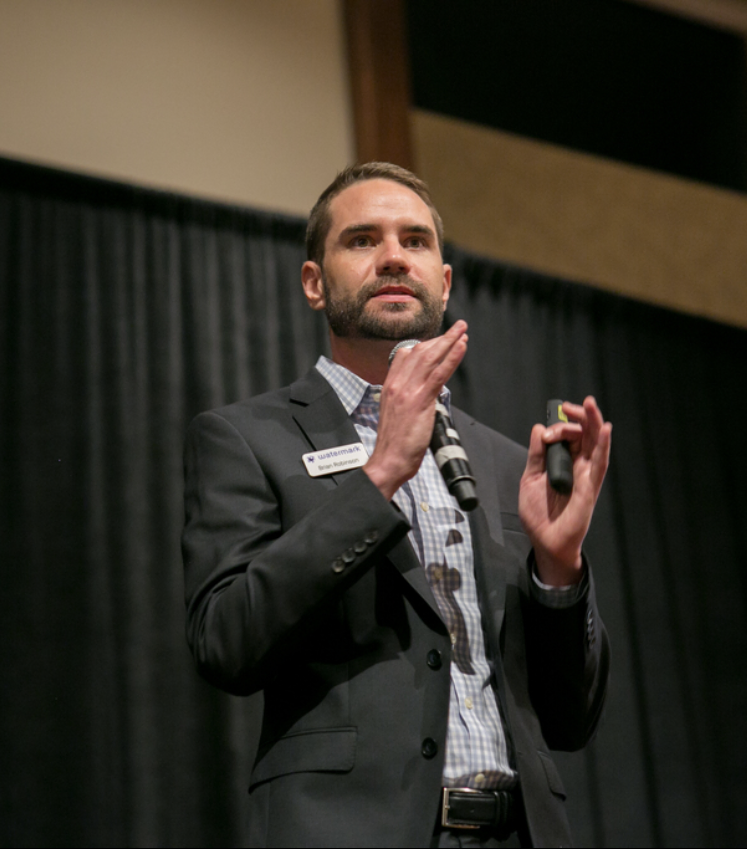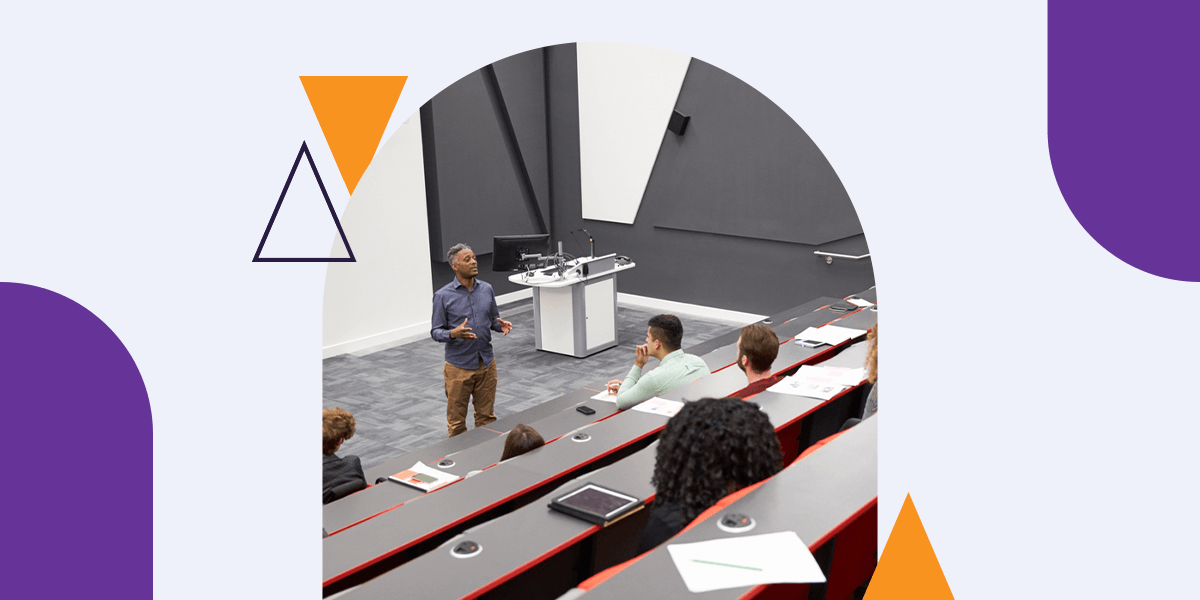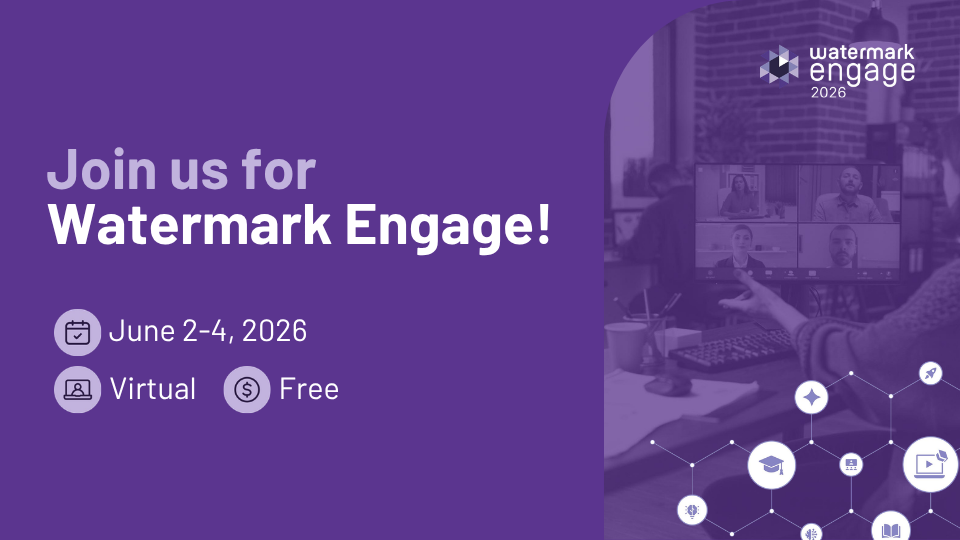
How can higher education teams use AI to spend less time on administrative tasks and more time on meaningful work? At Watermark’s 2026 Engage conference, Dr. Joe Sallustio, host of The EdUp Experience podcast, shared practical ideas during his keynote, “Stop Doing the Grunt Work: How to Use AI to Build Assessments, Synthesize Data, and Gather Insights – Without Sacrificing Quality.”
Explore these video resources featuring three highlights from his presentation to discover practical ways to use AI in higher education, from building team familiarity with AI tools to reviewing institutional policies.
1. Make AI experimentation part of the workweek
How can teams build familiarity with AI? Sallustio recommends giving team members a practical AI assignment each week and asking them to share the prompts they used and the outputs they generated.
Regular experimentation gives teams opportunities to compare results, learn from one another, and discover where AI can support their work. Over time, this practice can help teams become more comfortable using AI in their workflows.
2. Use AI to spend less time on busywork
Spreadsheets, presentations, and data gathering can take time away from the work higher education professionals want to focus on. Sallustio challenges leaders to consider how AI can help reduce repetitive tasks and create more time for meaningful work.
For assessment and continuous improvement teams, this means considering which routine tasks could be streamlined so more time is available to review findings, interpret information, and determine next steps. AI can help organize information and prepare summaries, while human expertise remains essential to interpreting results and making informed decisions.
3. Apply AI to policy reviews and assessment development
Could AI help make institutional policies easier for students to understand? Sallustio demonstrates how teams can use AI to review public-facing catalog information, identify potentially confusing policies, and find opportunities to clarify language.
AI can also support assessment planning by helping teams draft rubrics, exams, and assignments based on defined learning outcomes. Faculty and assessment leaders can then review the results, identify potential gaps, and ensure assessments align with institutional expectations.
Put AI to work with purpose
These examples illustrate how higher education professionals can use AI to streamline repetitive tasks, support assessment planning, and review institutional policies while keeping human judgment central. With thoughtful implementation and ongoing review, AI can help teams approach their work more efficiently while maintaining the quality and context needed to make informed decisions.