From compliance to impact: how four institutions are redefining effectiveness

Institutional Effectiveness Webinar Insights | Watermark

Higher education effectiveness has long been tied to accreditation cycles and compliance checklists. While these remain essential, they are no longer sufficient. Today, leaders must navigate dwindling resources and tighter budgets while meeting rising demands for transparency and measurable outcomes. 

That pressure has led campuses to revisit a basic question: What is institutional effectiveness in higher education today?

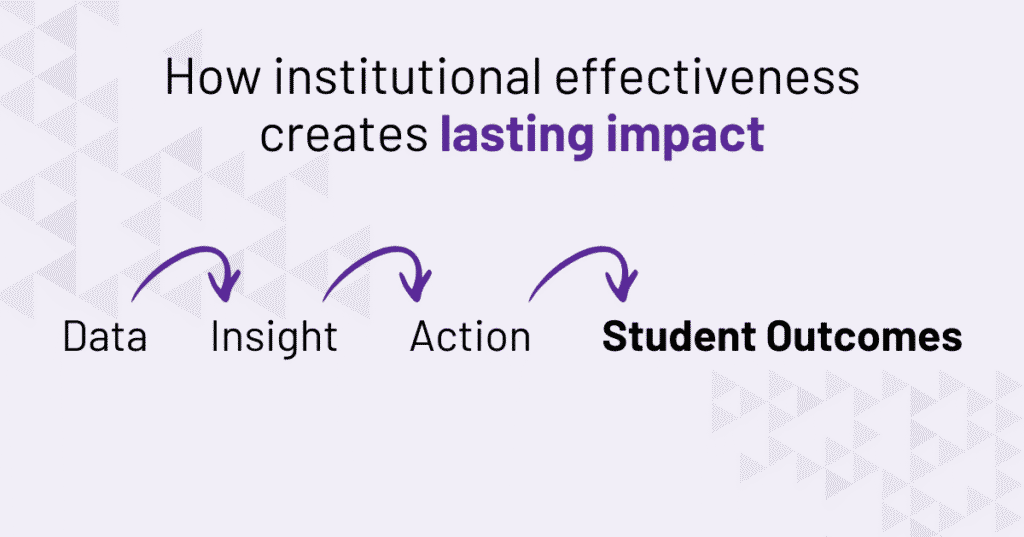
In Watermark’s Institutional Effectiveness (IE) webinar series, featuring leaders from the University of Arizona, University of Southern Mississippi, Embry-Riddle Aeronautical University, and Howard University, institutional effectiveness is shifting from proving compliance to demonstrating impact. Success now means leveraging assessment, data, and technology to drive student outcomes and align strategy with mission. 

The following takeaways reflect key themes from IE leaders and provosts, outlining what is changing, what is working, and where to focus next.

1. Assessment is shifting from compliance to continuous improvement

A core theme from the series was the reframing of assessment from a periodic accreditation hurdle to an ongoing practice of continuous improvement. When assessment data informs regular academic and operational dialogue, it evolves from a reporting obligation into a vital tool for learning and decision-making. 

To achieve this at scale, institutions are increasingly adopting systems like Planning & Self-Study to unify assessment, accreditation, and institutional strategy. 

An assessment of best practices in higher education reveals that institutions embedding assessment in day-to-day work are better positioned to:

  • Spot trends earlier
  • Respond proactively to challenges
  • Demonstrate meaningful progress to accreditors

In this context, assessment and accreditation in higher education become mutually reinforcing rather than competing priorities.

Takeaway

Leaders are shifting assessment from a chore to a strategy. By integrating it into existing meetings and reviews, we can highlight faculty impact and strengthen student outcomes without adding to the workload.

A simple first step:
Review your next assessment communication. Does it lead with student impact or compliance deadlines?
ai curriculum

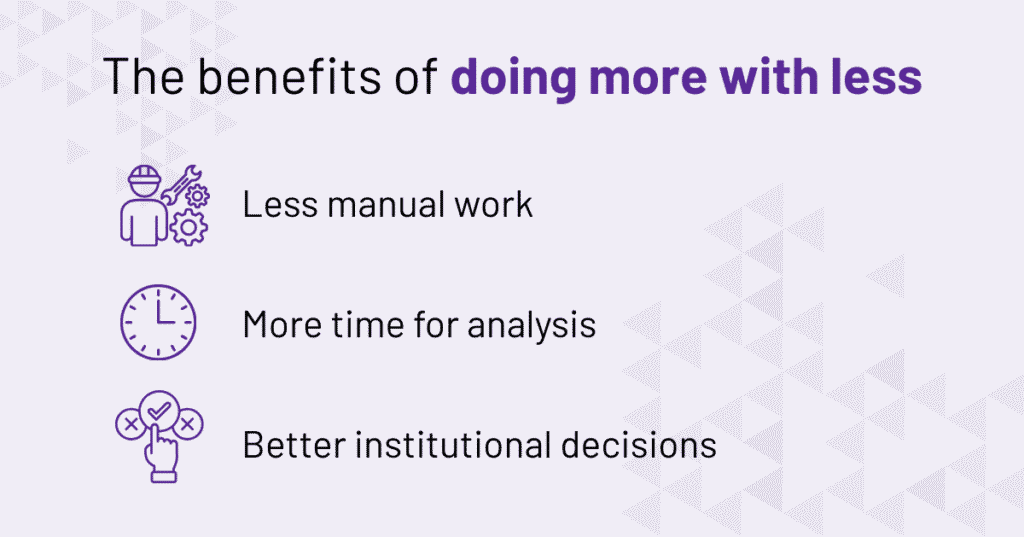
2. Technology is enabling institutions to do more with less

Resource constraints were a recurring reality across the webinars. Many institutions described how technology is helping them maintain rigor and accountability without overloading faculty and staff.

Modern assessment systems for continuous improvement reduce dependence on manual processes, spreadsheets, and disconnected tools. By automating collection, standardizing workflows, and centralizing evidence, institutions can:

  • Free up faculty and staff time
  • Cut down on duplicated effort
  • Improve consistency across units

This “do more with less” approach enables teams to focus on analysis and action rather than administrative work.

Takeaway

Effective technology turns paperwork time into improvement. 

A simple first step:
Ask one department how they actually experience your assessment system. Their answer will tell you whether it feels empowering or transactional.

3. Student-centered assessment practices are gaining momentum

Another key theme was the increasing focus on student-centered assessment. Institutions are moving beyond aggregate outcomes to ask deeper questions:

  • Who is being served well?
  • Where are disparities emerging?
  • How can assessment inform stronger learning experiences?

Participants emphasized using disaggregated data and intentional assessment to connect results to student experiences. By identifying exactly which students are thriving and which may need additional support, institutions can target improvements effectively, shifting the focus of institutional effectiveness from compliance to student success.

Takeaway

Success isn’t just about a school’s overall results; it’s about ensuring every student is learning and progressing. Assessment teams reframed their messaging to tie every conversation back to student growth, institutional mission, and closing performance gaps.

A simple first step:
At your next data review, require one question about student performance patterns before discussing compliance metrics.

4. One-size-fits-all assessment doesn’t work

The webinar series highlighted that rigid, one-size-fits-all assessment models often fail to account for institutional complexity and disciplinary nuances. 

 Effective frameworks strike a balance between:

  • Institutional consistency
  • Departmental flexibility

Leaders shared how adaptable systems allow academic units to assess what matters most to them while still contributing to institution-wide insight. This balance increases participation and improves data quality, both critical for sustainable assessment.

Takeaway

Leaders described honoring faculty expertise and allowing units to own their assessment design. When you give departments the freedom to measure what matters most in their specific field, they are much more likely to participate and provide better information. Effective systems provide guardrails, not rigid scripts. 

A simple first step:

Review one institutional assessment template with a small faculty group. Ask what feels helpful and what feels overly restrictive. Use that feedback to refine expectations.

5. Faculty buy-in is the foundation of sustainable assessment

No assessment plan works without faculty engagement. Speakers repeatedly noted that faculty buy-in grows when the work is clear, relevant, and respectful of their time.

Institutions that are having success with assessment typically:

  • Clearly articulate why assessment matters
  • Show how data shapes decisions about teaching and learning
  • Offer tools that simplify, not complicate, faculty work

When faculty see assessment as meaningful insight rather than performative, participation rises, and the quality of results improves.

Takeaway

A recurring theme was shifting from “arbiters of assessment” to consultants and collaborators. Assessment leaders met regularly with units, translated processes clearly, and highlighted faculty efforts that previously went undocumented.

A simple first step:
Publicly recognize one example of meaningful assessment work this semester.

6. Centralized data unlocks deeper institutional insight

Many institutions struggle not because they lack data, but because they lack integration. A major takeaway from the series was the power of centralized data for institutional insight.

When assessment, accreditation, and planning data are connected, leaders gain:

  • A more complete view of institutional performance
  • The ability to identify cross-functional trends
  • Greater confidence in strategic decisions

This centralized approach strengthens institutional effectiveness in higher education by turning fragmented information into actionable intelligence.

Takeaway

Data is only “intelligence” when it’s connected. Centralization should improve clarity, not just storage. 

A simple first step:
Identify one strategic goal and trace which systems contain related data. If the information lives in more than two disconnected places, integration may be limiting insight.
ai curriculum

7. AI is changing how faculty engage with feedback

Artificial intelligence surfaced as a forward-looking theme across the series. Institutions are beginning to explore how AI can support, not replace, faculty judgment.

Examples included:

  • AI-assisted feedback to help faculty respond more efficiently
  • Pattern recognition to surface common themes in assessment results
  • Support for drafting narratives and reports that faculty can refine

Used thoughtfully, AI can reduce time spent on repetitive tasks and free faculty to focus on high-impact teaching and mentoring.

Takeaway

AI isn’t there to grade students or replace professors. It’s there to clear the busy work off their desks. 

A simple first step:
Pilot AI support in one limited, clearly defined area (e.g., summarizing feedback themes), then gather faculty input before expanding.

8. Promotion and tenure processes are becoming more transparent and efficient

Beyond assessment, the series also highlighted growing attention to promotion and tenure processes. Institutions are recognizing that clear criteria and consistent processes are essential for trust.

Technology-supported workflows help institutions:

  • Standardize documentation
  • Provide better visibility into progress
  • Reduce administrative bottlenecks and confusion

This transparency helps build faculty confidence and reinforces the institution’s commitment to fair and accountable evaluation.

Takeaway

By making the promotion process transparent and digital, schools build trust with their teachers and ensure that hard work is rewarded fairly and on time. 

A simple first step:
Survey recently promoted faculty about points of confusion in the process. Use their feedback to clarify guidance or improve workflows.

9. Collaborative rubric development drives alignment and buy-in

Rubrics frequently emerged as a practical tool for alignment. When rubrics are developed collaboratively, they help create a shared understanding of expectations across programs and departments.

Institutions reported that collaborative rubric work can:

  • Improve consistency in how work is evaluated
  • Supports richer, more targeted feedback
  • Builds faculty ownership of assessment outcomes

Well-aligned rubrics tie learning outcomes to evidence in ways that are both rigorous and usable.

Takeaway

Collaboration transforms rubrics from compliance artifacts into teaching tools.

A simple first step:
Host one cross-department session to review and refine a shared rubric. Focus on clarity and alignment to learning outcomes.

10. Leadership and policy support accelerate institutional change

Finally, the webinars reinforced that lasting institutional effectiveness depends on visible support from leadership. When presidents, provosts, and academic leaders champion assessment and improvement, efforts gain traction.

Effective leaders tend to:

  • Align policies with assessment goals
  • Invest in systems that support long-term improvement
  • Use data to guide (not just justify) decisions

Leadership commitment signals that institutional effectiveness is a strategic priority, not a compliance exercise.

Takeaway 

Leaders who model data-informed decision-making signal that impact matters. 

A simple first step:

At your next cabinet meeting, ask: “What recent decision was directly informed by assessment evidence?”
ai curriculum

Turning insight into impact

Watermark’s webinar series delivered a clear message: institutional effectiveness is evolving beyond static reports and accreditation cycles. Today, it is defined by an institution’s ability to demonstrate impact, adapt, and improve. 

By adopting modern practices, leveraging technology, and fostering campus-wide collaboration, institutions can shift from compliance to impact, turning effort into evidence and evidence into action. The ultimate challenge is no longer proving that assessment matters, but ensuring the systems, culture, and leadership are aligned to make it matter consistently. 

To see how Watermark supports this work, request a demo and explore how our solutions can help higher education leaders do more with less while clearly demonstrating their impact.

ai curriculum
MORE HELPFUL ARTICLES
Teaching creative problem-solving: Strategies for advisors and professors
Blog

Teaching creative problem-solving: Strategies for advisors and professors

Read Blog →
How to help students understand and navigate the FAFSA
Blog

How to help students understand and navigate the FAFSA

Read Blog →
ai curriculum
Blog

Engaging modern learners: 9 innovative tools and techniques for success

Read Blog →
Go beyond retention: How to strategically plan for student success
Blog

Go beyond retention: How to strategically plan for student success

Read Blog →
An assessment of high-impact practices (HIP) for educational institutions
Blog

An assessment of high-impact practices (HIP) for educational institutions

Read Blog →
Gen P: How to anticipate their expectations
Blog

Gen P: How to anticipate their expectations

Read Blog →
ai curriculum
Blog

Guide to evaluating a professor

Read Blog →
ai curriculum
Blog

11 tips for choosing an educational intelligence software partner

Read Blog →
ai curriculum
Blog

3 tips to improve your online teaching

Read Blog →
ai curriculum
Blog

3 ways disruption makes assessment more relevant

Read Blog →
ai curriculum
Blog

4 best practices for sustaining institutional effectiveness in a crisis

Read Blog →
ai curriculum
Blog

4 questions every campus should ask about assessment

Read Blog →
7 ways to improve student engagement
Blog

7 ways to improve student engagement

Read Blog →
a group of people are sitting around a table with laptops
Blog

4 ways to make curriculum mapping easier

Read Blog →
ai curriculum
Blog

4 ways to simplify the accreditation process

Read Blog →
ai curriculum
Blog

10 best practices for higher education data security

Read Blog →
ai curriculum
Blog

5 criteria for effective goal management

Read Blog →
ai curriculum
Blog

Assessment innovation at community colleges: a NILOA-led conversation

Read Blog →
ai curriculum
Blog

Assessment: how to write clear outcomes

Read Blog →
person using a laptop with a screen that says ai
Blog

Watermark’s responsible use of AI statement

Read Blog →
ai curriculum
Blog

Accelerating faculty activity reporting

Read Blog →
ai curriculum
Blog

Increasing course evaluation response rates at your institution

Read Blog →
ai curriculum
Blog

7 tips To avoid survey fatigue

Read Blog →
person using a laptop with a screen that says ai
Blog

How AI will transform higher education

Read Blog →
ai curriculum
Blog

6 lessons from educational insights to increase student engagement

Read Blog →
ai curriculum
Blog

7 ways a survey solution connects you with students and each other

Read Blog →
ai curriculum
Blog

Tips for professors: 10 keys to effective communication with students

Read Blog →
ai curriculum
Blog

How curriculum mapping helps students learn more

Read Blog →
ai curriculum
Blog

Conducting a curriculum gap analysis

Read Blog →
ai curriculum
Blog

10 ways ePortfolios support distance learning

Read Blog →
ai curriculum
Blog

6 reasons to use Faculty Success (formerly Digital Measures) to power faculty web profiles

Read Blog →
ai curriculum
Blog

6 things peer reviewers wish you knew about HLC accreditation

Read Blog →
ai curriculum
Blog

6 tips for conducting effective academic program reviews

Read Blog →
ai curriculum
Blog

7 best practices for engaging faculty in activity reporting with Walden University

Read Blog →
ai curriculum
Blog

Using Student Data for the Improvement of Student and Institutional Success

Read Blog →
ai curriculum
Blog

How emerging technology can help you fulfill the promise of assessment

Read Blog →
ai curriculum
Blog

How faculty profiles can help track progression toward tenure

Read Blog →
ai curriculum
Blog

How having labor market data can help colleges and universities

Read Blog →
ai curriculum
Blog

Using Watermark Student Learning & Licensure for colleges of education

Read Blog →
ai curriculum
Blog

Using Watermark Student Learning & Licensure for colleges of social work and counseling

Read Blog →
ai curriculum
Blog

Using Student Learning & Licensure To Support Faculty and Students With edTPA Templates

Read Blog →
ai curriculum
Blog

How to use data to improve campus learning

Read Blog →
ai curriculum
Blog

How technology can improve how you’re building, managing, and supporting the faculty and academic affairs staff

Read Blog →
ai curriculum
Blog

Using technology to make assessment more meaningful and sustainable

Read Blog →
ai curriculum
Blog

Using Technology to Support Prospective Students

Read Blog →
ai curriculum
Blog

ePortfolios for students: digital portfolio tips & tricks for success

Read Blog →
ai curriculum
Blog

How higher ed can benefit from open data

Read Blog →
ai curriculum
Blog

How Howard University Makes Use of Technology for a Competitive Edge

Read Blog →
ai curriculum
Blog

The analysis of assessment professional roles and activities

Read Blog →
ai curriculum
Blog

A foundational guide for mentoring students

Read Blog →
ai curriculum
Blog

How Often Do You Need To Submit an Accreditation Self-Study?

Read Blog →
ai curriculum
Blog

What is educational impact?

Read Blog →
ai curriculum
Blog

How academic program reviews help ensure curriculum relevance and future readiness

Read Blog →
ai curriculum
Blog

Effective data-sharing strategies for assessment professionals

Read Blog →
The secret to student success at community college
Blog

The secret to student success at community college

Read Blog →
ai curriculum
Blog

A comprehensive guide to conducting academic program reviews in higher education

Read Blog →
ai curriculum
Blog

How Online Course Evaluations Help Improve Instructional Course Quality

Read Blog →
ai curriculum
Blog

How to align your campus around your strategic goals

Read Blog →
ai curriculum
Blog

How our tools can assist with assessment

Read Blog →
An overview of SACSCOC accreditation
Blog

An overview of SACSCOC accreditation

Read Blog →
ai curriculum
Blog

How to assess internship readiness of students

Read Blog →
ai curriculum
Blog

Insight-Inspired Progress at Engage 2022

Read Blog →
ai curriculum
Blog

Watermark Insights vs. EAB

Read Blog →
ai curriculum
Blog

How to Use Faculty Evaluation Data | Watermark Insights

Read Blog →
ai curriculum
Blog

Watermark vs. Element451

Read Blog →
ai curriculum
Blog

How predictive analytics helps improve student enrollment

Read Blog →
ai curriculum
Blog

Watermark vs. Starfish

Read Blog →
ai curriculum
Blog

How to empower students with edtech solutions

Read Blog →
ai curriculum
Blog

Identifying and Supporting Gifted Students

Read Blog →
ai curriculum
Blog

Watermark Partners With Concourse Syllabus to Offer a Comprehensive Syllabus Management Solution

Read Blog →
ai curriculum
Blog

How to implement data-driven decision-making in higher education

Read Blog →
ai curriculum
Blog

Watermark Shares: The Teachers Who Inspired Us

Read Blog →
ai curriculum
Blog

Watermark’s focus on creating accessible systems

Read Blog →
ai curriculum
Blog

How to Leverage Curriculum Mapping to Meet Your Institution’s Needs

Read Blog →
ai curriculum
Blog

What are IT leaders saying about tech transformation in higher ed?

Read Blog →
ai curriculum
Blog

Empowering faculty collaboration and engagement: Tools and techniques for success

Read Blog →
ai curriculum
Blog

How program review committees can use labor market data to improve student outcomes

Read Blog →
ai curriculum
Blog

Looking to Become Faculty? What Doctoral Students & Postdocs Should Know

Read Blog →
End-of-course survey 101
Blog

End-of-course survey 101

Read Blog →
ai curriculum
Blog

Program effectiveness survey questions

Read Blog →
ai curriculum
Blog

What Is a Course Evaluation?

Read Blog →
ai curriculum
Blog

Promoting a Growth Mindset for Student Success

Read Blog →
ai curriculum
Blog

The new faculty member’s guide to accreditation

Read Blog →
ai curriculum
Blog

What is planning and self-study software used for in higher education?

Read Blog →
ai curriculum
Blog

What makes direct and indirect assessment so difficult?

Read Blog →
ai curriculum
Blog

The Intrinsic Purpose of Student Surveys

Read Blog →
ai curriculum
Blog

The importance of cocurricular programs for student success

Read Blog →
ai curriculum
Blog

The Outcomes of Success Coaching

Read Blog →
ai curriculum
Blog

How to put your institution’s data to work to make planning easier

Read Blog →
ai curriculum
Blog

What’s Your “Why?” Understanding the Value of Outcomes Reporting

Read Blog →
The Positive Impact of Success Coaching on Community College Students
Blog

The Positive Impact of Success Coaching on Community College Students

Read Blog →
ai curriculum
Blog

The Importance of Assessment in Higher Education

Read Blog →
ai curriculum
Blog

Identifying and Implementing Graduate Student Retention Strategies

Read Blog →
ai curriculum
Blog

How can higher education reignite a passion for learning?

Read Blog →
ai curriculum
Blog

Quality Assurance, Self-Study, and Assessment Technology at Community Colleges: A NILOA-Led Conversation

Read Blog →
ai curriculum
Blog

“A radical rethink”: How CV imports transform faculty activity reporting

Read Blog →
ai curriculum
Blog

The secret to SACSCOC accreditation success

Read Blog →
ai curriculum
Blog

Why data is the catalyst for personalizing education

Read Blog →
ai curriculum
Blog

The top challenges students face in higher education

Read Blog →
ai curriculum
Blog

Higher Education Act Reauthorization: What Colleges and Universities Need To Know

Read Blog →
ai curriculum
Blog

An overview of regional (institutional) accreditation vs. national accreditation

Read Blog →
ai curriculum
Blog

Overcoming the unique challenge of assessment at community college

Read Blog →
ai curriculum
Blog

The Why Behind Curriculum Mapping

Read Blog →
ai curriculum
Blog

Responsible AI adoption for higher education instructors

Read Blog →
ai curriculum
Blog

Is Retention More Profitable Than Enrollment?

Read Blog →
ai curriculum
Blog

Rubric-Based Assessments: Usage and Benefits

Read Blog →
ai curriculum
Blog

The Growing Importance of College Course Reviews

Read Blog →
ai curriculum
Blog

Engage Conference Throughout the Years

Read Blog →
ai curriculum
Blog

SACSCOC accreditation: 8 things peer reviewers want you to know

Read Blog →
ai curriculum
Blog

Three Building Blocks of Essential Course Content

Read Blog →
ai curriculum
Blog

Engaging in Service as a Faculty Member or Administrator

Read Blog →
ai curriculum
Blog

Setting goals for faculty annual reviews

Read Blog →
ai curriculum
Blog

How to improve the assessment process by simplifying process management

Read Blog →
ai curriculum
Blog

Why student success is so important for higher education

Read Blog →
Woman taking notes at her desk
Blog

Three integration essentials to improve your course evaluation process

Read Blog →
ai curriculum
Blog

How to enhance your curriculum to meet current labor market needs

Read Blog →
ai curriculum
Blog

Why It’s a Great Time for New Tech in Higher Ed

Read Blog →
ai curriculum
Blog

Why Mentoring Matters

Read Blog →
ai curriculum
Blog

Why Predictive Analytics Is Crucial for Maximizing College Retention Efforts

Read Blog →
ai curriculum
Blog

How to ensure student support from prospect to enrollee

Read Blog →
ai curriculum
Blog

Harnessing data analytics to enhance faculty performance and development

Read Blog →
ai curriculum
Blog

The Role of a Student Success Administrator in Higher Education

Read Blog →
ai curriculum
Blog

The Evolution of Higher Education

Read Blog →
ai curriculum
Blog

Exploring the “Why” Behind Change Resistance in Higher Education

Read Blog →
ai curriculum
Blog

Factors That Influence Student Engagement in Higher Education

Read Blog →
ai curriculum
Blog

Using Watermark to help faculty close the loop on assessment

Read Blog →
ai curriculum
Blog

The Benefits of Student-Faculty Relationships Mentoring

Read Blog →
ai curriculum
Blog

Faculty tips for surviving the end of the semester

Read Blog →
ai curriculum
Blog

Finding Solutions: Closing the Gender Enrollment and Retention Gap in Higher Education

Read Blog →
ai curriculum
Blog

For efficient accreditation reporting, a culture shift is necessary

Read Blog →
ai curriculum
Blog

From professor to product architect: Brian Robinson

Read Blog →
ai curriculum
Blog

How To Prepare for End-of-Course Evaluations

Read Blog →
ai curriculum
Blog

Getting faculty on board with assessment

Read Blog →
ai curriculum
Blog

Get the Important Answers With an All-in-One Course Evaluation Solution

Read Blog →
ai curriculum
Blog

Going Above & Beyond: Measuring Faculty Activity During a Crisis

Read Blog →
ai curriculum
Blog

Preparing for the Growing Role of Student Affairs 

Read Blog →
ai curriculum
Blog

Guided Academic Pathways: Student Success Starts With a Plan

Read Blog →
ai curriculum
Blog

High-impact practices in higher education

Read Blog →
ai curriculum
Blog

Removing data silos in higher ed with technology

Read Blog →
ai curriculum
Blog

How to create a culture of continuous improvement at your college

Read Blog →
ai curriculum
Blog

Data management strategies for higher education

Read Blog →
ai curriculum
Blog

How higher education can be more environmentally sustainable

Read Blog →
ai curriculum
Blog

Cost containment guide: How higher ed tech can help

Read Blog →
ai curriculum
Blog

How Student Success Technology Can Help Institutions With Declining Enrollment

Read Blog →
ai curriculum
Blog

Accreditation challenges – and how top institutions are solving them

Read Blog →
ai curriculum
Blog

A map for your accreditation journey

Read Blog →
ai curriculum
Blog

The accreditation process for two-year schools

Read Blog →
ai curriculum
Blog

How to Assess Career Readiness in College Students

Read Blog →
ai curriculum
Blog

Long-Term Adjuncts: What You Should Know

Read Blog →
ai curriculum
Blog

Advancing assessment practices with Watermark Planning & Self-Study

Read Blog →
ai curriculum
Blog

9 assessment trends to watch for in 2024

Read Blog →
ai curriculum
Blog

Assessing the Reliability of Student Feedback in Higher Education

Read Blog →
Assessment trends: how to evolve your assessment strategy
Blog

Assessment trends: how to evolve your assessment strategy

Read Blog →
ai curriculum
Blog

How to Become a Higher Education Administrator

Read Blog →
ai curriculum
Blog

Benefits of ePortfolios for technical colleges

Read Blog →
ai curriculum
Blog

How to Build a Culture of Assessment in Higher Education

Read Blog →
ai curriculum
Blog

Leveraging Watermark – Blackboard integration: Powerful insights throughout your assessment cycle

Read Blog →
Tips for success coaching young men
Blog

Tips for success coaching young men

Read Blog →
9 tips to improve student satisfaction in higher education
Blog

9 tips to improve student satisfaction in higher education

Read Blog →
ai curriculum
Blog

Three Things You Need for a (Productive) Data-Informed Discussion

Read Blog →
ai curriculum
Blog

Tips for Faculty When Writing a Letter of Recommendation

Read Blog →
ai curriculum
Blog

Tips for mastering the CAEP accreditation process

Read Blog →
ai curriculum
Blog

Why You Should Care About the Performance of Other Educational Institutions

Read Blog →
ai curriculum
Blog

How to Improve Faculty Engagement for Student Success

Read Blog →
ai curriculum
Blog

How to Choose a Higher Education Assessment Software

Read Blog →
ai curriculum
Blog

Tips for Engaging Underperforming Students

Read Blog →
ai curriculum
Blog

Why You Should Consolidate Your Tech Stack

Read Blog →
ai curriculum
Blog

8 Strategies When Starting a New Academic Position

Read Blog →
ai curriculum
Blog

Inspiring students to perform their best

Read Blog →
ai curriculum
Blog

Improving institutional effectiveness with Watermark Planning & Self-Study

Read Blog →
ai curriculum
Blog

How to connect programs to occupations with curriculum mapping

Read Blog →
ai curriculum
Blog

How to keep students engaged over summer break

Read Blog →
ai curriculum
Blog

Women in STEM: Stacy Becker Helps Keep Watermark Products Accessible

Read Blog →
ai curriculum
Blog

COVID conversations: 5 dos and don’ts for adjusting your course evaluation strategy

Read Blog →
ai curriculum
Blog

How to improve parent engagement with data

Read Blog →
ai curriculum
Blog

COVID-related resources for higher education

Read Blog →
ai curriculum
Blog

5 Tips for Faculty When Writing a Letter of Recommendation

Read Blog →
ai curriculum
Blog

Dr. Linda Ludwig mentors Watermark clients; she’s walked in their shoes

Read Blog →
ai curriculum
Blog

Top 5 Challenges for Student Retention

Read Blog →
ai curriculum
Blog

Student success: 12 higher ed trends for 2024

Read Blog →
ai curriculum
Blog

How to improve student academic planning

Read Blog →
ai curriculum
Blog

You Say Tomato, I Say Tomato: Are Student Performance and Student Learning Outcomes the Same Thing?

Read Blog →
ai curriculum
Blog

Student Success Best Practices: The Perfect Combination

Read Blog →
ai curriculum
Blog

Your Strategy for Assessment During COVID: Keep Calm & Collect On

Read Blog →
ai curriculum
Blog

Characteristics of a Student Prepared for College

Read Blog →
ai curriculum
Blog

10 ways to go beyond orientation for student success

Read Blog →
ai curriculum
Blog

Improving student retention at technical schools

Read Blog →
ai curriculum
Blog

How to conquer 5 common assessment challenges

Read Blog →
ai curriculum
Blog

Student Success: Fostering a Growth Mindset

Read Blog →
Success Coaching for a Personalized Student Advising Experience
Blog

Success Coaching for a Personalized Student Advising Experience

Read Blog →
ai curriculum
Blog

Improve Student Retention With Predictive Analytics

Read Blog →
ai curriculum
Blog

The Importance of Success Coaching in Higher Ed

Read Blog →
ai curriculum
Blog

How Higher Ed Institutions Can Invest in Supporting Spanish-Speaking Students & Families

Read Blog →
ai curriculum
Blog

Improving community college relevance

Read Blog →
ai curriculum
Blog

Top 5 Reasons to Use Digital Tools for Key Campus Processes

Read Blog →
ai curriculum
Blog

Supporting First-Generation Students: The 22 Rules of Success

Read Blog →
ai curriculum
Blog

The use of labor market data to respond to declining enrollment

Read Blog →
ai curriculum
Blog

The evolution of faculty workload management: Trends and technologies

Read Blog →
ai curriculum
Blog

7 labor market insights IE and IR teams can use to evaluate program effectiveness

Read Blog →
ai curriculum
Blog

10 ways to support students struggling with classes

Read Blog →
a man wearing glasses is looking at a laptop computer
Blog

Using ePortfolios in end-of-semester assessments

Read Blog →
ai curriculum
Blog

How College Leaders Can Use Labor Market Data

Read Blog →
ai curriculum
Blog

Taking Advantage of Course Feedback in Higher Ed

Read Blog →
ai curriculum
Blog

Higher ed technology management guide

Read Blog →
ai curriculum
Blog

Using ePortfolios in higher education

Read Blog →
ai curriculum
Blog

Taking course evaluation reporting to the next level

Read Blog →
ai curriculum
Blog

Using Data to Personalize Students’ Coursework

Read Blog →
ai curriculum
Blog

How to Create the Best Course Evaluations

Read Blog →
ai curriculum
Blog

The Importance of Technology Due Diligence for Higher Education Software

Read Blog →
ai curriculum
Blog

How technology can amplify your educational impact

Read Blog →
ai curriculum
Blog

The 5 Stages of Student Success

Read Blog →
ai curriculum
Blog

The Benefits of Course Evaluation in Higher Education

Read Blog →
ai curriculum
Blog

The Brilliant Underachiever: Coaching Bright Students Who Struggle

Read Blog →
ai curriculum
Blog

Using campus data to support student success and steer the institution

Read Blog →
ai curriculum
Blog

The four crucial steps to ensure a successful technology implementation

Read Blog →
ai curriculum
Blog

The Future of Data Convergence on Campuses

Read Blog →
ai curriculum
Blog

How assessment foundations can help community colleges

Read Blog →
ai curriculum
Blog

How to ensure adult learning success

Read Blog →
ai curriculum
Blog

The Impact of Cognitive Bias on Student Surveys

Read Blog →
ai curriculum
Blog

The Importance of Accessible Technology in Higher Education

Read Blog →
ai curriculum
Blog

The importance of developing rapport with students

Read Blog →
ai curriculum
Blog

Is aging technology holding back your university?

Read Blog →
ai curriculum
Blog

4 Issues Impacting College Administrators

Read Blog →
ai curriculum
Blog

How to cultivate a positive faculty culture at your higher ed institution

Read Blog →
ai curriculum
Blog

How To Define Student Success

Read Blog →
ai curriculum
Blog

How To Do a Course Evaluation

Read Blog →
ai curriculum
Blog

Dropout prevention and alternatives for at-risk college students

Read Blog →
ai curriculum
Blog

Best practices in faculty recruitment

Read Blog →
ai curriculum
Blog

Tips for professors: best practices for online teaching

Read Blog →
ai curriculum
Blog

How to Engage Faculty in Assessment

Read Blog →
ai curriculum
Blog

Boosting alumni engagement opportunities

Read Blog →
ai curriculum
Blog

Closing the loop — applying data-informed insights

Read Blog →
ai curriculum
Blog

How colleges and universities adapt to changing job markets

Read Blog →
ai curriculum
Blog

Why flexibility is important for student success

Read Blog →
ai curriculum
Blog

We are the champions: Building a case for new tech

Read Blog →
ai curriculum
Blog

Unlocking your potential: Could you benefit from a certification?

Read Blog →
ai curriculum
Blog

How to Find Success Coaches for Your College

Read Blog →
ai curriculum
Blog

How to improve student success with community-based learning

Read Blog →
ai curriculum
Blog

How to develop key performance indicators for community colleges

Read Blog →
ai curriculum
Blog

Making a Difference in Student Wellness

Read Blog →
ai curriculum
Blog

How to keep faculty data reliable and up-to-date

Read Blog →
ai curriculum
Blog

Making technology implementation a success

Read Blog →
Ways community colleges can define, measure, and improve student success
Blog

Ways community colleges can define, measure, and improve student success

Read Blog →
ai curriculum
Blog

How to identify and manage valuable course improvements with Planning & Self-Study software

Read Blog →
ai curriculum
Blog

How to know when it’s time for new higher ed technology

Read Blog →
ai curriculum
Blog

Maximizing the Impact of Course Evaluations During COVID

Read Blog →
ai curriculum
Blog

Microcredentials and how ePortfolios can highlight them

Read Blog →
ai curriculum
Blog

How to use SIS data at your school

Read Blog →
ai curriculum
Blog

Minority Male Success Initiative (MMSI): A Catalyst for Change

Read Blog →
ai curriculum
Blog

What Year Is Most Critical for College Student Success?

Read Blog →
ai curriculum
Blog

How to use LMS data to support curriculum development

Read Blog →
ai curriculum
Blog

MSCHE accreditation: 7 things peer reviewers wish you knew

Read Blog →
ai curriculum
Blog

Use ePortfolios to give students a leg up in job searches

Read Blog →
ai curriculum
Blog

The Power of Non-Academic Outcomes

Read Blog →
ai curriculum
Blog

Where Are They Now? An Update on our 2020 Watermark Scholars

Read Blog →
ai curriculum
Blog

The “who” and “what” of university administration

Read Blog →
Understanding the Support Needs of Community College Students
Blog

Understanding the Support Needs of Community College Students

Read Blog →
ai curriculum
Blog

Faculty Search Committees: What Are They and What Do They Do?

Read Blog →
ai curriculum
Blog

How to make assessment simpler

Read Blog →
ai curriculum
Blog

The ROI of innovation: How higher education technology is driving institutional survival

Read Blog →
ai curriculum
Blog

Keeping up with 2024 higher ed trends?

Read Blog →
ai curriculum
Blog

How to Prepare for a Virtual Assessment Site Visit

Read Blog →
Transforming the Student Co-Curricular Experience of Community Colleges
Blog

Transforming the Student Co-Curricular Experience of Community Colleges

Read Blog →
ai curriculum
Blog

Tracking Progress With Student Learning & Licensure

Read Blog →
ai curriculum
Blog

Online Course Feedback 101: From the Physical to the Digital Classroom

Read Blog →
self-study report definition
Blog

How to prepare for an accreditation peer review visit

Read Blog →
ai curriculum
Blog

Overcoming financial obstacles with help from higher education institutions

Read Blog →
ai curriculum
Blog

Preparing for Life on Sabbatical

Read Blog →
ai curriculum
Blog

Partnering With NCCCS to Help Students Succeed

Read Blog →
ai curriculum
Blog

How to reduce faculty workload using technology

Read Blog →
ai curriculum
Blog

Positive Change During Challenging Times: How Six Leaders Transformed Higher Education During the Pandemic

Read Blog →
ai curriculum
Blog

How to Support Grad Students

Read Blog →
ai curriculum
Blog

Best practices to reengage community college dropouts 

Read Blog →
ai curriculum
Blog

How to support students struggling with time management

Read Blog →
ai curriculum
Blog

How to switch accreditors as a higher ed institution

Read Blog →
ai curriculum
Blog

How Your College Can Support Veterans

Read Blog →
ai curriculum
Blog

How colleges can combat rising attrition rates through increased retention efforts

Read Blog →
ai curriculum
Blog

How to prepare for a successful CAEP accreditation

Read Blog →
ai curriculum
Blog

Top course evaluation questions

Read Blog →
Top Things to Consider When Hiring a Student Success Coach
Blog

Top Things to Consider When Hiring a Student Success Coach

Read Blog →
ai curriculum
Blog

Continuing education evaluation guide

Read Blog →
ai curriculum
Blog

Identifying at-risk students through the course registration process

Read Blog →
ai curriculum
Blog

5 Creative ways to use end-of-semester assessment data

Read Blog →
ai curriculum
Blog

11 community college trends for 2023

Read Blog →
ai curriculum
Blog

The importance of data transparency for higher ed success

Read Blog →
ai curriculum
Blog

Higher education institutional outcomes – defining a proficiency scale

Read Blog →
ai curriculum
Blog

How to democratize data at your institution to improve student outcomes

Read Blog →
ai curriculum
Blog

Demonstrating faculty influence on student success with Radford University

Read Blog →
ai curriculum
Blog

Developing proactive advising techniques

Read Blog →
ai curriculum
Blog

The differences between direct and indirect measurement

Read Blog →
ai curriculum
Blog

Discover the secrets of faculty “buy-in”

Read Blog →
ai curriculum
Blog

Does the classroom environment matter?

Read Blog →
ai curriculum
Blog

Collecting Feedback With Watermark Course Evaluations & Surveys

Read Blog →
ai curriculum
Blog

Barriers to using assessment results and how to overcome them

Read Blog →
ai curriculum
Blog

Engaging faculty in the new school year

Read Blog →
ai curriculum
Blog

How to use institutional data to spot students likely to transfer

Read Blog →
ai curriculum
Blog

Top reasons why students transfer and what your institution can do

Read Blog →
ai curriculum
Blog

Supporting working-class students: 7 ways to show support

Read Blog →
ai curriculum
Blog

How to support incoming transfer student success

Read Blog →
ai curriculum
Blog

Why cloud-based video feedback software is helpful for higher ed

Read Blog →
ai curriculum
Blog

How to track the results of culturally responsive education

Read Blog →
Watermark vs. Civitas
Blog

Watermark vs. Civitas

Read Blog →
ai curriculum
Blog

How to attract and retain top faculty at your institution

Read Blog →
ai curriculum
Blog

How to be an effective program dean

Read Blog →
Building soft skills for future careers: Integrating professional development into your curriculum
Blog

Building soft skills for future careers: Integrating professional development into your curriculum

Read Blog →
15 common challenges that first-year students face
Blog

15 common challenges that first-year students face

Read Blog →
How to spot struggling first-year students and intervene
Blog

How to spot struggling first-year students and intervene

Read Blog →
12 tips to improve first-year college student performance
Blog

12 tips to improve first-year college student performance

Read Blog →
ai curriculum
Blog

Weighing legacy admissions: What to consider at your institution

Read Blog →
ai curriculum
Blog

Key metrics for mid-semester program reviews: What to measure and why

Read Blog →
ai curriculum
Blog

Supporting student success during midterms

Read Blog →
ai curriculum
Blog

Understanding the student engagement software space

Read Blog →
ai curriculum
Blog

7 student engagement software trends to watch for in 2025

Read Blog →
ai curriculum
Blog

7 innovative assessment practices to transform your institution

Read Blog →
ai curriculum
Blog

Cultivating faculty development amid the uncertain future of tenure

Read Blog →
ai curriculum
Blog

Involving faculty in accreditation processes

Read Blog →
ai curriculum
Blog

Striking a balance: Guiding long-term faculty success in both research and teaching

Read Blog →
ai curriculum
Blog

Leading causes of faculty burnout and how to spot it

Read Blog →
ai curriculum
Blog

The impact of AI on institutional research 

Read Blog →
ai curriculum
Blog

Essential strategies to support adjunct and part-time faculty

Read Blog →
ai curriculum
Blog

What are guided career pathways for faculty?

Read Blog →
ai curriculum
Blog

Separation of school and state: Can the Department of Education pull accreditation? No. Here’s why

Read Blog →
ai curriculum
Blog

How to ensure faculty professional development with Faculty Career Pathways 

Read Blog →
How to align curriculum development with future industry needs
Blog

How to align curriculum development with future industry needs 

Read Blog →
ai curriculum
Blog

How to use campus-wide student feedback and data to drive decision-making

Read Blog →
three people are looking at a computer screen
Blog

Tips for building your strategic plan

Read Blog →
ai curriculum
Blog

7 trends in college closings in the last 10 years

Read Blog →
ai curriculum
Blog

Uncovering the trend of companies removing degree requirements for a job

Read Blog →
ai curriculum
Blog

How academic freedom ensures student and faculty success

Read Blog →
ai curriculum
Blog

How to measure and improve student experience

Read Blog →
ai curriculum
Blog

Student perception surveys: 10 questions to ask and why

Read Blog →
ai curriculum
Blog

The rise of trade and technical careers: What’s behind it?

Read Blog →
ai curriculum
Blog

How to navigate the enrollment cliff in higher education

Read Blog →
a woman sits at a desk in a classroom with other students taking notes
Blog

12 ways colleges can support student persistence

Read Blog →
ai curriculum
Blog

Edtech in 2025

Read Blog →
ai curriculum
Blog

The importance of course evaluations in community colleges

Read Blog →
ai curriculum
Blog

The essential role of course evaluations in accreditation

Read Blog →
ai curriculum
Blog

The importance of community colleges in 2025: A look back and forward

Read Blog →
ai curriculum
Blog

How to promote faculty cohesion and development as professors worry about academic freedom

Read Blog →
ai curriculum
Blog

What’s the timeline for accreditation and where does assessment fall?

Read Blog →
ai curriculum
Blog

Why community is so important for college student success

Read Blog →
ai curriculum
Blog

How community colleges can prepare to train students for our manufacturing future

Read Blog →
ai curriculum
Blog

Community college trends in 2025

Read Blog →
ai curriculum
Blog

Driving faculty impact at community colleges

Read Blog →
ai curriculum
Blog

How community colleges can increase course demand by adding courses on AI

Read Blog →
ai curriculum
Blog

Synchronous vs. asynchronous learning: How to measure success

Read Blog →
ai curriculum
Blog

How can we elevate our student advising strategies for better outcomes?

Read Blog →
ai curriculum
Blog

The top 11 benefits of free community colleges for communities

Read Blog →
ai curriculum
Blog

Experiential learning: What it is and why it benefits students

Read Blog →
ai curriculum
Blog

How to Talk About AI Use With Students

Read Blog →
ai curriculum
Blog

Leveraging student data to drive institutional change: An interview with David Brock

Read Blog →
ai curriculum
Blog

All about education technology (edtech) and how it can improve your institution

Read Blog →
ai curriculum
Blog

How to map experiential learning at your institution

Read Blog →
ai curriculum
Blog

12 top enrollment strategies for community colleges

Read Blog →
a woman is giving a presentation in front of a white board
Blog

How to measure the effectiveness of faculty training and development

Read Blog →
ai curriculum
Blog

How to showcase faculty credentials

Read Blog →
ai curriculum
Blog

13 ways to support new faculty to ensure a successful semester

Read Blog →
ai curriculum
Blog

New faculty orientation: 15 best practices to follow

Read Blog →
ai curriculum
Blog

How to improve community college graduation rates 

Read Blog →
ai curriculum
Blog

The benefits of teaching at a community college

Read Blog →
ai curriculum
Blog

How community colleges can help professionals upskill

Read Blog →
ai curriculum
Blog

Optimizing instructional capacity at your institution

Read Blog →
ai curriculum
Blog

How colleges can help support international student success

Read Blog →
ai curriculum
Blog

Strategic enrollment management for sustainable enrollment at your institution 

Read Blog →
ai curriculum
Blog

Can AI reduce faculty workload? Here’s how

Read Blog →
ai curriculum
Blog

What’s the key to helping students beat the sophomore slump? 5 ways student advising can help them succeed

Read Blog →
ai curriculum
Blog

Incorporating media literacy courses to help with campus discourse

Read Blog →
ai curriculum
Blog

Why technology is important to institutional, faculty, and student success

Read Blog →
ai curriculum
Blog

The future of institutional effectiveness amid increasing enrollment

Read Blog →
ai curriculum
Blog

Make your edtech funding dreams come true

Read Blog →
ai curriculum
Blog

How higher ed accreditors are preparing for administrative changes

Read Blog →
ai curriculum
Blog

How federal student aid for college could be affected in 2025 and beyond 

Read Blog →
10 trends in adult learning
Blog

10 trends in adult learning

Read Blog →
Tips for success coaching young women in higher education
Blog

Tips for success coaching young women in higher education

Read Blog →
Tips for success coaching for first-gen students in higher education
Blog

Tips for success coaching for first-gen students in higher education

Read Blog →
Tips for success coaching for international students
Blog

Tips for success coaching for international students

Read Blog →
ai curriculum
Blog

Higher ed AI-enhanced assessment: a how-to guide

Read Blog →
The community college administrator's guide to AI implementation
Blog

The community college administrator’s guide to AI implementation

Read Blog →
Competency-based assessment in trade programs
Blog

Competency-based assessment in trade programs

Read Blog →
Summer planning guide for assessment coordinators
Blog

Summer planning guide for assessment coordinators 

Read Blog →
Streamlining summer program review in technical education
Blog

Streamlining summer program review in technical education

Read Blog →
Measuring career readiness in technical schools
Blog

Measuring career readiness in technical schools

Read Blog →
Leveraging LMS data for student support
Blog

Leveraging LMS data for student support

Read Blog →
The role of assessment in technical education accreditation
Blog

The role of assessment in technical education accreditation

Read Blog →
How to improve the success of summer program students
Blog

How to improve the success of summer program students

Read Blog →
How community colleges can use data to reengage students
Blog

How community colleges can use data to reengage students

Read Blog →
How to improve student outcomes at trade schools
Blog

How to improve student outcomes at trade schools

Read Blog →
Using data to improve certificate program student outcomes
Blog

Using data to improve certificate program student outcomes 

Read Blog →
Faculty engagement in technical program assessment
Blog

Faculty engagement in technical program assessment

Read Blog →
7 labor market data points you can use to enhance technical programs
Blog

7 labor market data points you can use to enhance technical programs

Read Blog →
Effective ways to track student skills development in trade programs
Blog

Effective ways to track student skills development in trade programs 

Read Blog →
ai curriculum
Blog

What is contributing to rising college costs?

Read Blog →
ai curriculum
Blog

Supporting International Student With Visa Status Worries

Read Blog →
ai curriculum
Blog

How To Track Student Course Certification Progress

Read Blog →
ai curriculum
Blog

Tips For Creating Effective Course Evaluations for Technical Programs

Read Blog →
ai curriculum
Blog

Ways to Provide Data Transparency in Technical Education Assessment

Read Blog →
ai curriculum
Blog

How FAFSA Changes Will Affect Institutional Planning

Read Blog →
ai curriculum
Blog

The Human Element: Balancing AI and Faculty Engagement in Student Success

Read Blog →
How to improve the success of summer program students
Blog

How to prevent summer melt this year

Read Blog →
How community colleges are closing the skills gap with smart faculty tools
Blog

How community colleges are closing the skills gap with smart faculty tools

Read Blog →
Doing more with less: How higher ed can stay nimble in an uncertain economy
Blog

Doing more with less: How higher ed can stay nimble in an uncertain economy

Read Blog →
Using student feedback to spot and respond to mental health challenges
Blog

Using student feedback to spot and respond to mental health challenges

Read Blog →
ai curriculum
Blog

How community colleges fuel career readiness

Read Blog →
Streamlining transfer pathways between technical and four-year programs
Blog

Streamlining transfer pathways between technical and four-year programs

Read Blog →
The art of balancing varying instructional program costs
Blog

The art of balancing varying instructional program costs

Read Blog →
Tips for supporting student success in remedial classes
Blog

Tips for supporting student success in remedial classes

Read Blog →
Digital credentials in education: Beyond the traditional transcript
Blog

Digital credentials in education: Beyond the traditional transcript

Read Blog →
How colleges use assessment data to build smarter advisory boards 
Blog

How colleges use assessment data to build smarter advisory boards 

Read Blog →
Summer-to-fall retention strategies for stopout students
Blog

Summer-to-fall retention strategies for stopout students 

Read Blog →
7 tips to make the most of student evaluation data
Blog

7 tips to make the most of student evaluation data

Read Blog →
All about early alerts: How to use them to improve outcomes 
Blog

All about early alerts: How to use them to improve outcomes 

Read Blog →
ai curriculum
Blog

How higher education institutions can unlock new revenue streams with better data

Read Blog →
Why a smart campus starts with your data
Blog

Why a smart campus starts with your data

Read Blog →
How to adapt to the changes in higher ed data
Blog

How to adapt to the changes in higher ed data

Read Blog →
Digital transformation in higher education: What to expect as an institution's CIO
Blog

Digital transformation in higher education: What to expect as an institution’s CIO

Read Blog →
Bridging faculty vs. staff to get the oars rowing in the same direction
Blog

Bridging faculty vs. staff to get the oars rowing in the same direction

Read Blog →
one woman explaining something to another woman looking at her computer
Blog

How colleges are unifying data across campuses to drive efficiency and insight

Read Blog →
Woman looking at documents at a desk
Blog

A “living” document: The universal transcript

Read Blog →
A community college building
Blog

The ROI of Community Colleges: How Data Improves Outcomes

Read Blog →
College student smiling outside a campus building
Blog

From application to alumni: the student journey, unified by data

Read Blog →
A group of medical students working on a laptop with a smiling medical school faculty member helping.
Blog

Simple and smart medical school promotion and tenure

Read Blog →
U.S. currency and coins on top of charts, with a yellow arrow rising upward, symbolizing financial growth or positive return on investment
Blog

Economic mobility: Which higher ed pathways deliver ROI?

Read Blog →
Yield sign against dark, cloudy sky. The sign reads: “Uncertainty ahead”.
Blog

Higher ed after Anthology’s bankruptcy protection filing: Why stability matters

Read Blog →
Watermark graphic announcing “Top 50 Education Software 2026” for Watermark Course Evaluations and Surveys, featuring the G2 2026 Best Software Top 50 Education Products award badge and the tagline “Recognized for driving meaningful course feedback."
Blog

Watermark earns spot on G2’s 2026 Best Software Awards for Top 50 Education Products

Read Blog →
ai curriculum
Blog

How to develop curriculum using AI

Read Blog →
Higher education in transition: key policy and practice changes shaping 2026
Blog

Higher education in transition: key policy and practice changes shaping 2026

Read Blog →
Beyond CV: How to Document & Standardize Evaluation of Diverse Faculty Tracks | Watermark
Blog

Beyond the CV: how to document and standardize evaluation of wide-ranging faculty tracks

Read Blog →
Faculty evaluation models: designing fair systems for adjunct and full-time faculty
Blog

Faculty evaluation models: designing fair systems for adjunct and full-time faculty

Read Blog →
Why faculty credentialing matters for student outcomes at community colleges
Blog

Why faculty credentialing matters for student outcomes at community colleges

Read Blog →
Institutional Effectiveness Webinar Insights | Watermark
Blog

From compliance to impact: how four institutions are redefining effectiveness

Read Blog →