Academic programs rarely change overnight. More often, small shifts in enrollment, student success, curriculum relevance, or resource utilization accumulate over time. Without consistent visibility into these trends, institutions may miss opportunities to strengthen programs before larger challenges emerge.
That’s why many institutions are moving beyond periodic reviews and adopting a more continuous approach to monitoring program health and assessing program viability to support ongoing program optimization. By regularly tracking key indicators (including enrollment trends, student outcomes, and other measures of program performance) deans and chairs can make informed decisions that support student success, strengthen academic quality, and align programs with institutional mission. Emerging tools such as Watermark Academic Momentum can support this approach by helping academic leaders synthesize program data, surface trends, and identify areas for further action.
What is program viability?
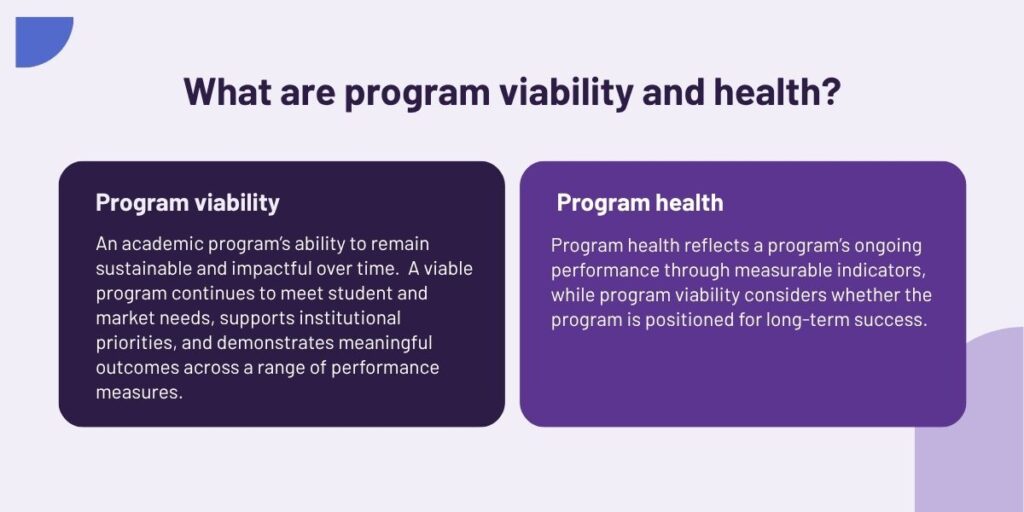
Program viability refers to an academic program’s ability to remain sustainable and impactful over time. A viable program continues to meet student and market needs, supports institutional priorities, and demonstrates meaningful outcomes across a range of performance measures.
While the terms are often used together, program viability and program health are not exactly the same.
Program health reflects a program’s ongoing performance through measurable indicators, while program viability considers whether the program is positioned for long-term success.
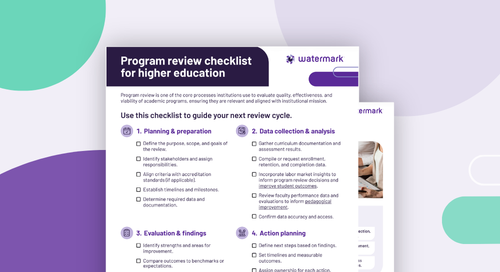
It’s also important to distinguish program viability from academic program review. Formal program reviews are comprehensive evaluations that typically occur every five to ten years. They often include self-studies, peer feedback, and long-term planning to evaluate program quality, demonstrate institutional effectiveness, and support accreditor or state requirements. Conducting these reviews on a multi-year cycle gives institutions enough time to assess meaningful trends and outcomes while balancing the time and effort required from faculty and academic leaders.
Continuous monitoring of program health is not a replacement for formal program review. Instead, it complements the review process by providing ongoing visibility into key performance indicators between review cycles. Regular monitoring helps academic leaders identify emerging risks and opportunities earlier, document progress over time, and make evidence-informed improvements that can strengthen the formal program review process.
Want a clearer view of program health?
Watermark Academic Momentum helps deans and chairs synthesize program data, surface trends, and identify areas that may warrant further attention. Learn how Academic Momentum can support a more continuous approach to understanding program performance.
H2 Key indicators of program health
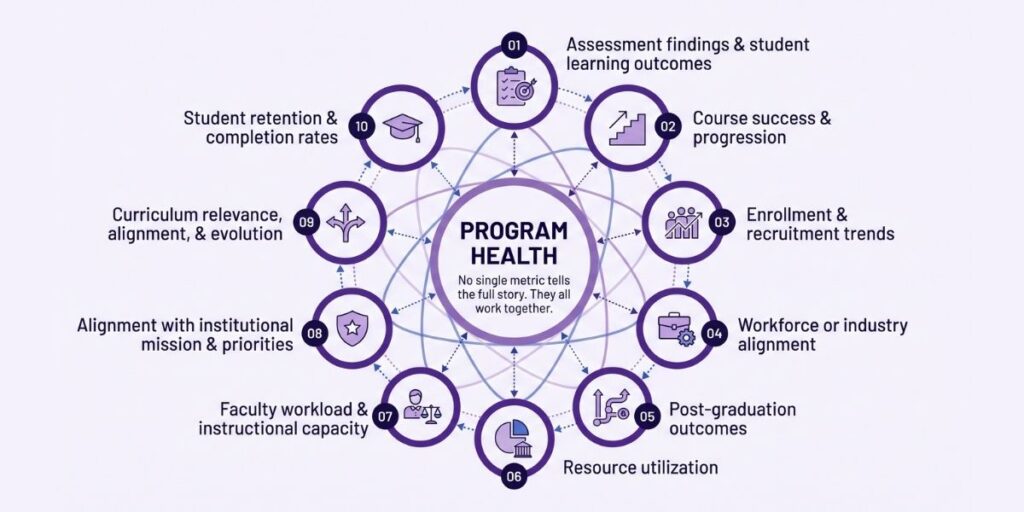
No single metric or measure tells the full story of a program’s health. Academic leaders should consider quantitative indicators alongside academic context and institutional priorities to develop a comprehensive understanding of program performance. Common measures include:
- Curriculum relevance, alignment, and evolution
- Assessment findings and student learning outcomes
- Student retention and completion rates
- Course success and progression
- Enrollment and recruitment trends
- Workforce or industry alignment, when applicable
- Alignment with institutional mission and strategic priorities
- Faculty workload and instructional capacity
- Resource utilization
- Post-graduation outcomes
Monitoring these indicators helps academic leaders identify opportunities to strengthen curriculum, improve program delivery, support enrollment goals, and respond to changing student and workforce needs.
Looking at these indicators together provides valuable insight into how a program is performing over time. Alongside institutional metrics, labor market data can help academic leaders understand how programs align with evolving workforce needs while providing additional context to support program review and long-term planning. Planning & Self-Study helps institutions gather and organize assessment findings and other evidence that inform program review, giving academic leaders a structured foundation for evaluating program performance and planning improvements.
Using data to guide program decisions
Effective program stewardship and academic program optimization depend on timely, reliable information. When academic leaders have access to current data, they can move beyond reactive decision-making and take a proactive approach to strengthening programs.
Many institutions now supplement formal program reviews with ongoing program monitoring to support continuous program optimization. This visibility helps academic leaders identify trends early, support annual budgeting, and make informed decisions throughout the year.
Regularly monitoring helps institutions:
- Identify emerging trends early
- Support annual budgeting and ongoing program optimization
- Foster productive conversations across academic departments
- Prioritize resources based on evidence
- Document decisions and demonstrate institutional effectiveness
Rather than relying solely on a formal review cycle, continuous monitoring helps academic leaders identify opportunities to strengthen programs, respond to changing conditions, and make evidence-informed decisions year-round.
Centralizing key program metrics can also reduce the time spent gathering information from multiple systems. With a more complete view of program performance, academic leaders can spend less time compiling data and more time acting on insights that support ongoing program optimization. Learn more about how Watermark Academic Momentum can help make sense of program data and identify opportunities for action.
As higher education continues to evolve, institutions that consistently monitor program viability and health are better positioned to adapt to change, strengthen academic programs, and support long-term institutional success.
See program health in action
Watermark’s new Academic Momentum product gives deans and chairs an AI-powered decision-support solution that brings key metrics together in one centralized view to surface trends, synthesize program data, and help leaders evaluate program health. Powered by advanced AI and pre-loaded with higher education context, Academic Momentum analyzes program documents, institutional assessment data, Watermark metrics, and relevant public signals to provide a comprehensive view of program health in a single session.
When paired with Planning & Self-Study, Academic Momentum helps institutions connect ongoing program monitoring with formal program review. Planning & Self-Study provides the structured foundation for managing formal program review cycles, supporting assessment and accreditation activities, while Academic Momentum helps academic leaders synthesize program data, identify emerging trends, and turn insights into action that supports continuous improvement, program sustainability, and evolving institutional priorities.
Watch the webinar to see Academic Momentum in action and explore how it can help academic leaders move from program data to informed action.
Frequently asked questions
What is program viability in higher education?
Program viability is an assessment of whether an academic program can continue to meet student needs and institutional goals over the long term. It considers factors such as enrollment, student outcomes, curriculum quality, and resource utilization.
How is program viability different from program review?
Program review is a comprehensive evaluation that typically takes place every several years and often includes self-study, peer review, and action planning. Monitoring program viability and health is an ongoing process that helps academic leaders track key metrics, identify trends, and make informed decisions between formal review cycles.
What are the key indicators of program health?
Program health is typically evaluated using a combination of indicators, including curriculum relevance, student learning outcomes, retention and completion rates, enrollment trends, faculty workload, resource utilization, and alignment with institutional mission. Looking at these indicators together provides a more complete understanding of a program’s performance and opportunities for ongoing program optimization.
Why is continuous program monitoring important?
Continuous program monitoring helps academic leaders evaluate whether programs continue to provide meaningful value for students and the institution. Looking at factors such as student outcomes, enrollment, resources, curriculum relevance, and workforce alignment can help leaders assess how well programs are meeting student needs and preparing students for changing workforce expectations. This ongoing visibility supports more informed decisions about program improvement and helps institutions consider the value, sustainability, and relevance of their academic offerings between formal program review cycles.